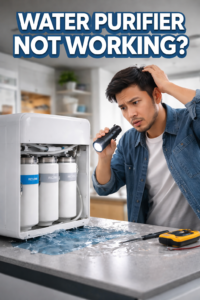
A water purifier leaking water is one of the most frustrating problems homeowners face. You walk into the kitchen and suddenly notice water pooling under your RO system. Your first thought? “Is my purifier damaged?”
Don’t worry — most water purifier leaks are common and easy to fix. In many cases, the issue is something simple like a loose pipe, worn O-ring, or high water pressure.
In this detailed guide, you’ll learn:
- Why your water purifier is leaking water
- Where the leak is coming from
- How to fix it step-by-step
- When to call a technician
- How to prevent leaks permanently
Let’s dive in.
Why Is Your Water Purifier Leaking?
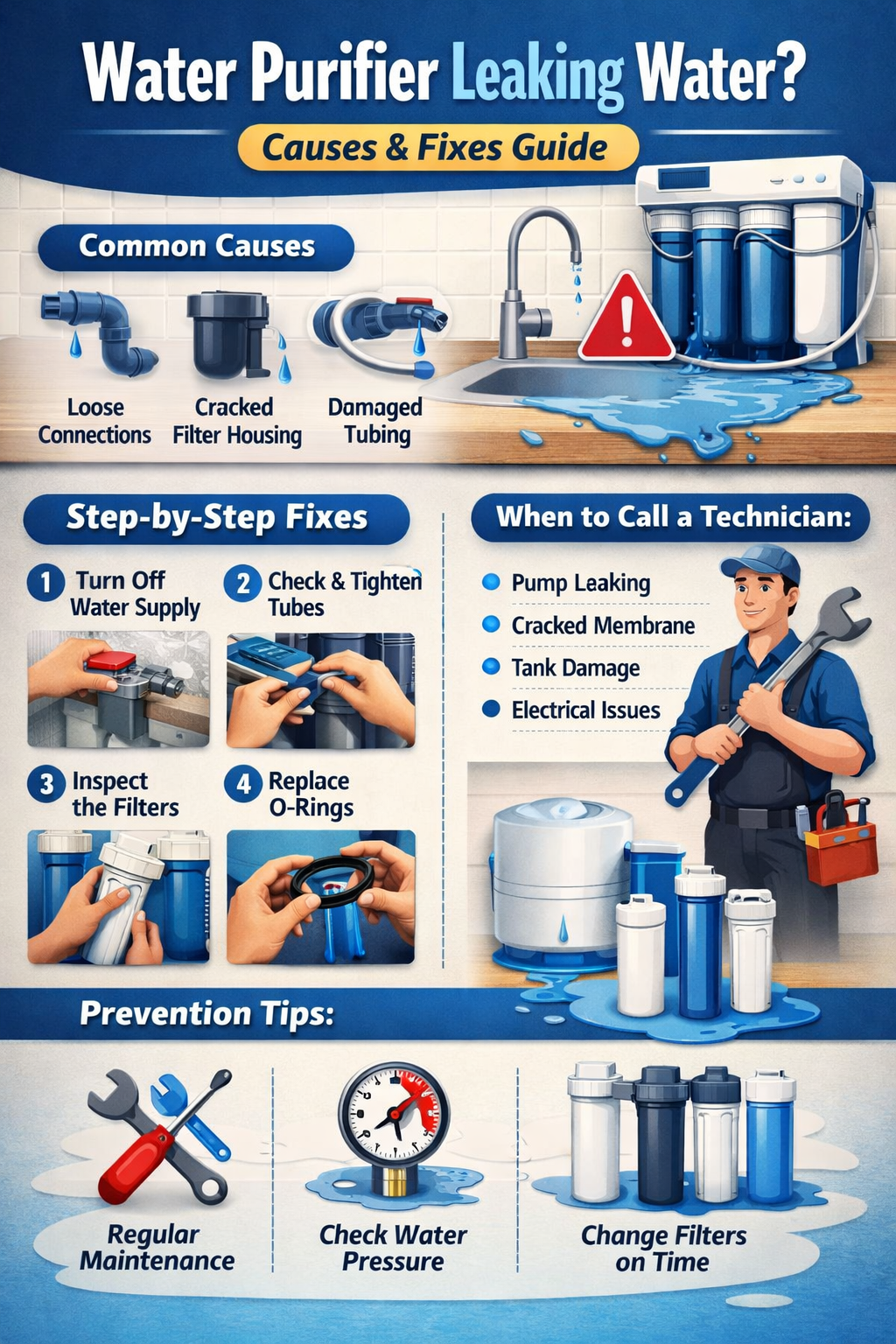
A water purifier usually leaks due to:
- Loose pipe connections
- Damaged RO tubing
- Worn-out O-ring
- Cracked filter housing
- High water pressure
Most leaks can be fixed by tightening connections or replacing damaged parts. Leakage can sometimes affect water flow. If your RO is not giving water, check our complete guide on RO water purifier no water flow.
Why Is Your Water Purifier Leaking Water?
Water purifiers have multiple tubes, filters, valves, and tanks. If even one small component loosens or cracks, water begins to leak.
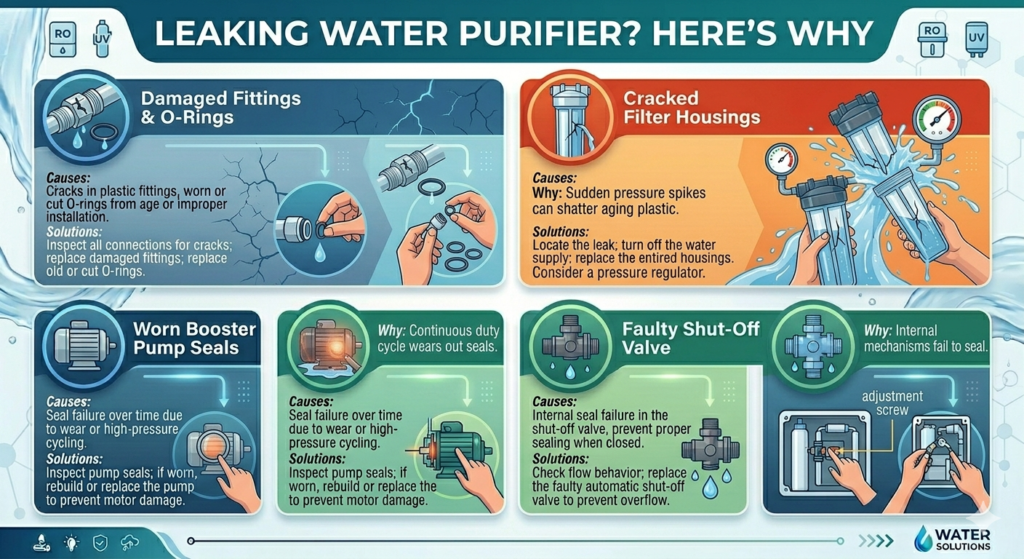
The most common causes include:
- Loose pipe connections
- Damaged RO tubes
- Cracked filter housing
- High water pressure
- Faulty storage tank
- Worn-out O-rings
- Improper filter installation
The good news? Most of these can be fixed at home in minutes.
Is a Leaking Water Purifier Dangerous?
Yes — it can be.
Here’s why you shouldn’t ignore it:
- Water can damage kitchen cabinets
- Electrical parts may short circuit
- Mold and bacteria may grow
- Water wastage increases bills
- Internal purifier components may fail
Even a slow drip can turn into a bigger problem over time.
Common Reasons Why Water Purifier Is Leaking
Let’s break down the most common causes.
Loose Pipe Connections
This is the #1 reason for water purifier leaking water. Tubes connected to filters or the tank may loosen over time.
Signs:
- Water dripping from pipe joints
- Wet tubing area
- Small puddle under purifier
Fix:
Simply push the tube firmly into the connector.
Damaged RO Tubing
RO tubes are made of plastic. Over time they may:
- Crack
- Bend
- Wear out
Even a tiny crack can cause continuous leakage.
Fix:
Replace the damaged tube. It costs very little.
Cracked Filter Housing
Filter housings hold cartridges under pressure. If cracked, water leaks slowly.
Causes:
- Over tightening
- Old plastic housing
- High water pressure
Solution:
Replace the filter housing.
Faulty Water Storage Tank
If your RO tank is damaged, water may leak from the bottom.
Check for:
- Water under tank
- Tank not filling properly
- Continuous dripping
You may need tank replacement.
High Water Pressure
High inlet pressure can force water out of joints.
Ideal pressure:
30–60 PSI
If pressure is too high:
- Tubes leak
- Filters crack
- Connectors loosen
Install a pressure reducing valve.
Water Purifier Leaking from Bottom
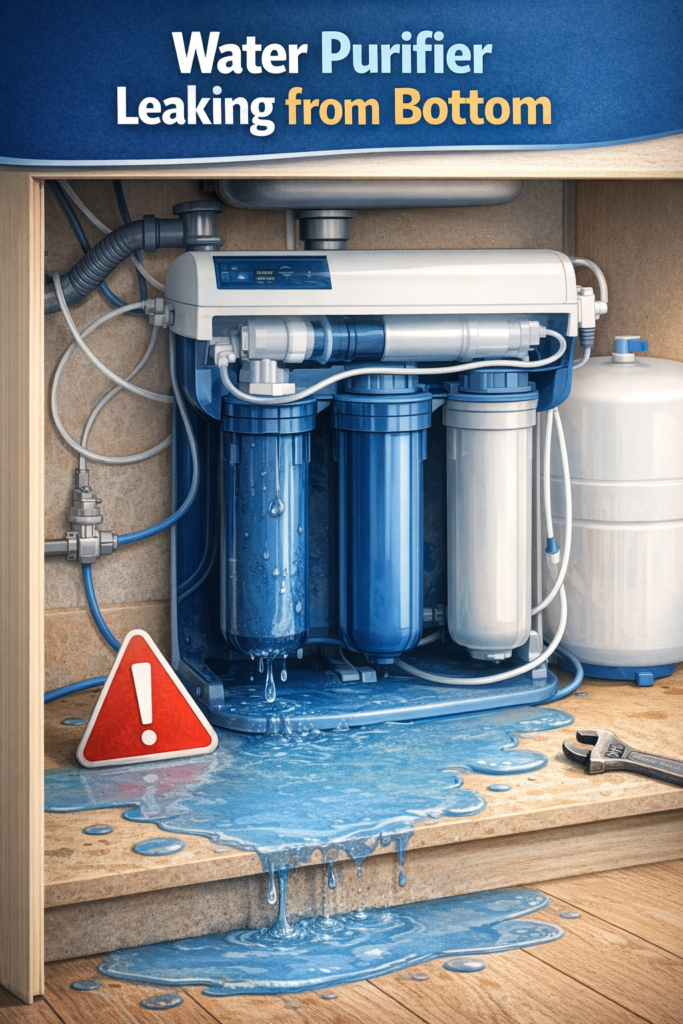
If water collects under your purifier, the issue is internal.
Internal Pipe Leakage
Internal pipes connect filters. One loose connection causes bottom leakage.
Fix:
Open purifier cover and inspect pipes.
Pump Leakage
RO pumps sometimes leak from seals.
Signs:
- Water near pump
- Pump noise
- Reduced pressure
Call technician if pump leaks. If you also hear unusual sounds from the unit, check our complete guide on water purifier making noise to diagnose the problem.
Filter Housing Crack
If bottom filter housing cracks, water leaks downward.
Replace housing immediately.
Water Purifier Leaking from Top
Top leakage usually comes from filters.
Loose Filter Cartridge
If cartridge isn’t tightened properly, water leaks from top.
Fix:
Tighten filter using housing wrench.
O-Ring Damage
O-rings seal filter housings. If damaged, water leaks.
Replace O-ring if:
- Flattened
- Broken
- Missing
This is a very common issue after filter change. In many cases, leakage from the bottom happens along with system failure. You can refer to our guide on water purifier not working for deeper troubleshooting.
RO Water Purifier Leaking from Tap
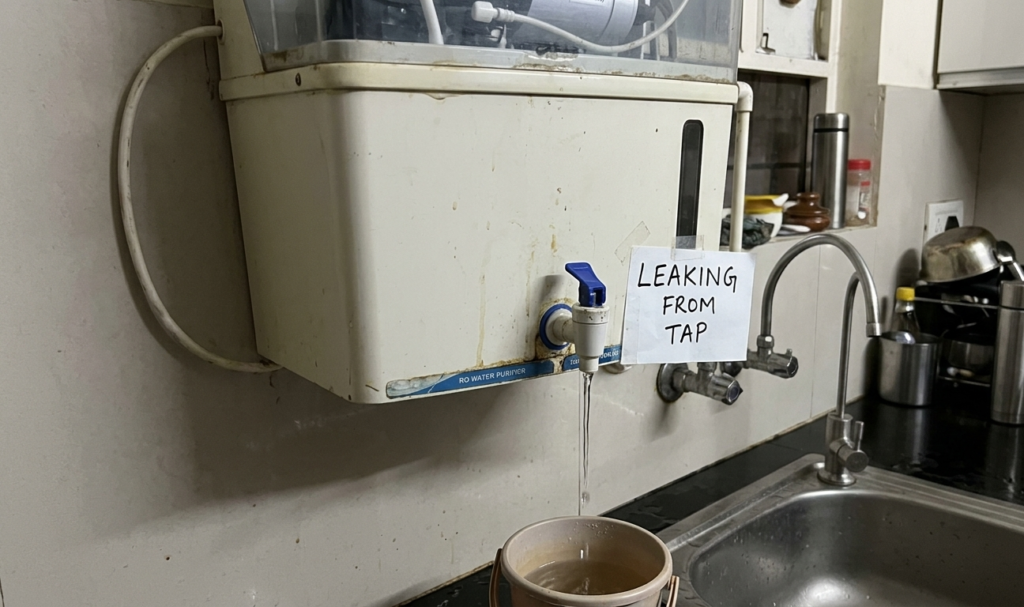
If water leaks from tap, don’t worry — it’s usually minor.
Faulty Faucet Valve
Tap valves wear out with time.
Symptoms:
- Water dripping from tap
- Slow continuous leak
Solution:
Replace faucet.
Loose Tap Connection
Tap pipe connection may loosen.
Fix:
Tighten nut under sink.
Water Purifier Leaking After Filter Change
This is extremely common.
Reasons include:
Incorrect Filter Installation
If filter is not aligned properly, water leaks.
Fix:
Remove and reinstall filter carefully.
Missing O-Ring
Technicians sometimes forget O-ring.
Without it, water leaks immediately.
Solution:
Install new O-ring.
How to Fix Water Purifier Leaking Water (Step-by-Step)
Follow this simple checklist.
Step 1: Turn Off Water Supply
Always start here. Turn off inlet valve.
This prevents further leakage.
Step 2: Check Tubes
Look for:
- Loose tubes
- Cracks
- Disconnections
Push tubes firmly.
Step 3: Tighten Connections
Check:
- Filter housing
- Tap connection
- Tank pipe
Tighten carefully.
Step 4: Inspect Filters
Remove filter housing and check:
- O-ring
- Crack
- Alignment
Reinstall properly.
When to Call a Technician
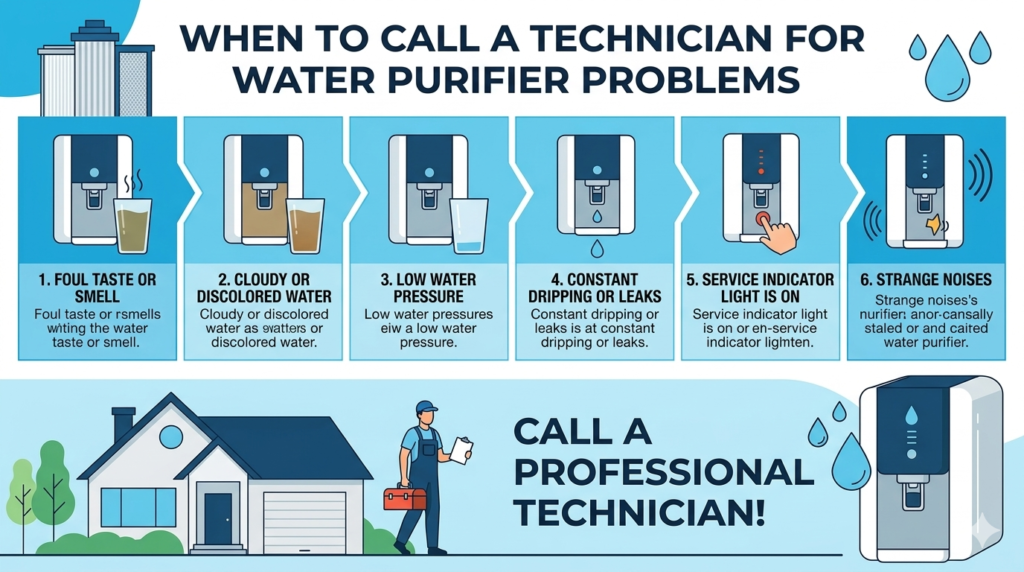
Call professional if:
- Pump is leaking
- Internal membrane housing cracked
- Tank damaged
- Electrical parts wet
- Leakage continues after fixing
Trying complex repairs yourself may worsen the issue.
How to Prevent Water Purifier Leakage
Prevention is always better.
Regular Maintenance
Service purifier every 6 months.
Technician checks:
- Pipes
- O-rings
- Filters
- Pressure
Check Water Pressure
Install pressure regulator if pressure is high.
This protects entire purifier.
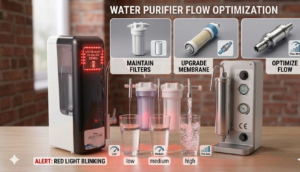
Replace Filters on Time
Old filters cause pressure buildup.
Replace:
- Sediment filter → 3–6 months
- Carbon filter → 6 months
- RO membrane → 12–18 months
- Post carbon → 12 months
This prevents leakage and improves water quality.
Quick Troubleshooting Table
| Problem | Possible Cause | Solution |
|---|
| Leak from bottom | Loose internal pipe | Tighten pipe |
| Leak from top | Damaged O-ring | Replace O-ring |
| Tap dripping | Faulty faucet | Replace tap |
| Leak after filter change | Wrong installation | Reinstall filter |
| Continuous leakage | High pressure | Install regulator |
Expert Tip
Most leakage issues in RO water purifiers are caused by worn-out O-rings or delayed filter replacement. Regular maintenance can prevent nearly 80% of leakage problems.
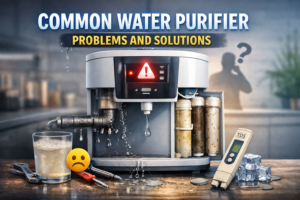
If you are facing multiple issues like no water flow or complete failure, don’t miss our complete guide on common water purifier problems and solutions.
Conclusion
A water purifier leaking water might look serious, but most leaks are simple to fix. Loose pipes, damaged O-rings, cracked housings, and high pressure are the most common reasons. By carefully inspecting tubes, tightening connections, and replacing worn parts, you can stop leakage quickly.
Check filters, monitor pressure, and service your purifier every six months. This not only prevents leaks but also ensures safe drinking water for your family.
FAQs
1. Why is my water purifier leaking from the bottom?
Usually due to loose internal pipes, cracked filter housing, or tank leakage. Open the purifier and inspect connections.
2. Is it normal for RO purifier to leak after filter change?
Yes, it happens if filter is not installed properly or O-ring is missing.
3. Can I use my purifier if it is leaking?
No. Turn it off immediately to avoid electrical damage and water wastage.
4. How much does it cost to fix water purifier leakage?
Minor fixes cost very little. Tube or O-ring replacement may cost ₹100–₹300.
5. How do I stop my RO purifier from leaking permanently?
Do regular servicing, replace filters on time, and maintain proper water pressure.