Introduction
Is your RO water purifier giving very slow water flow or taking too long to fill the tank?
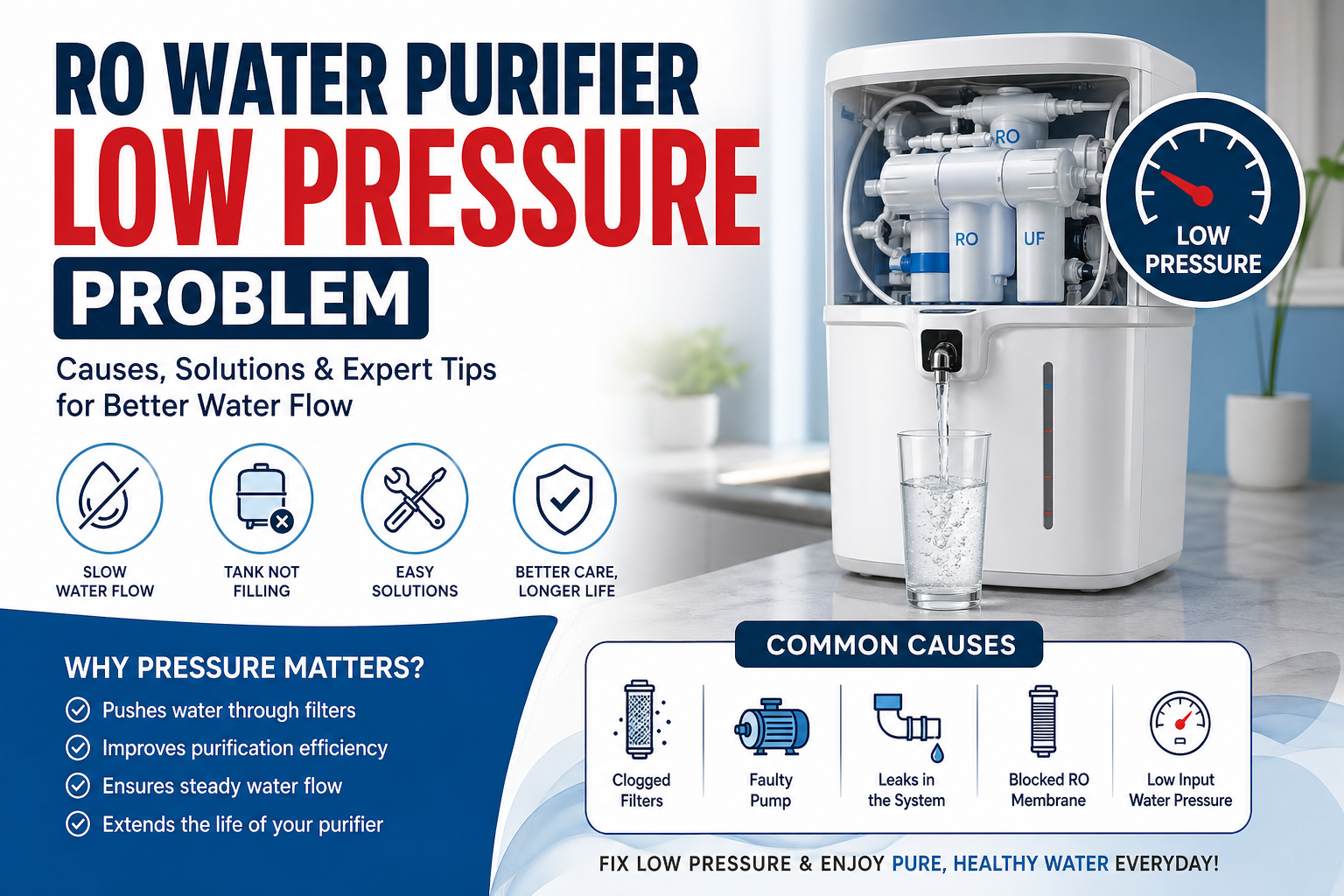
RO Water Purifier Low Pressure Problem is one of the most common issues faced in homes — especially in apartments and areas with weak municipal supply.
The good news? In most cases, you can fix it yourself in just a few minutes.
In this guide, you’ll learn:
- What causes low pressure in RO purifiers
- How to check water pressure at home
- Step-by-step solutions to fix it
- When to use a booster pump
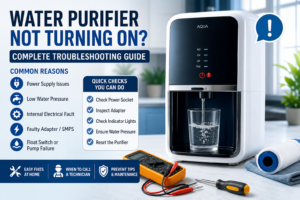
Let’s fix your purifier quickly. If your purifier is not working at all along with pressure issues, read our detailed guide on Water Purifier Not Working – Causes and Solutions.
Quick Answer:
Low pressure in an RO water purifier is usually caused by low input water supply, clogged filters, or a faulty pump. The ideal pressure required is 40–60 PSI. Most low-pressure issues can be fixed by replacing filters or installing a booster pump.
According to the recommended household water pressure levels by the U.S. Environmental Protection Agency, maintaining proper pressure is essential for efficient water system performance.
Quick Troubleshooting Table
| Problem | Possible Cause | Solution |
|---|---|---|
| Slow water flow | Low pressure | Install booster pump |
| Tank not filling | Clogged filters | Replace filters |
| Noisy pump | Pressure drop | Check inlet supply |
| No water output | Pump failure | Repair/replace pump |
| Weak flow | Membrane blockage | Replace membrane |
Water Pressure in RO Purifier: Definition
Water pressure is one of the main factors that affect the overall performance of an RO water purifier. It is like blood pressure in your organism — without enough water pressure, the system won’t work efficiently.
Why Pressure is Important in RO Purification Process?
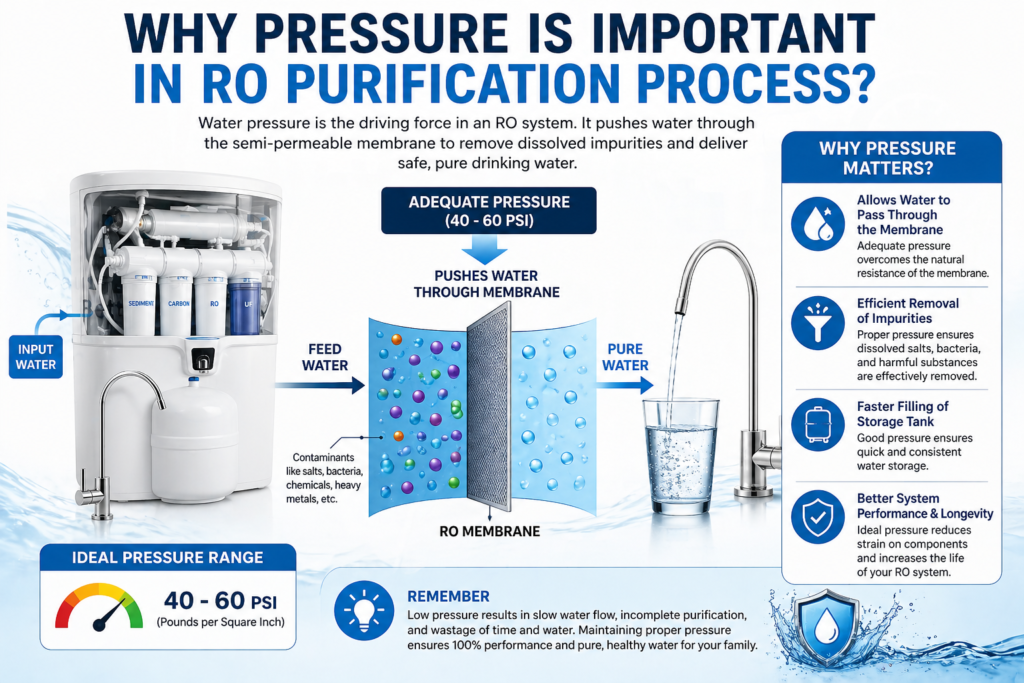
There are several reasons for which an RO purifier needs enough water pressure (about 40–60 PSI):
- To pump water through the purification process.
- To separate contaminants from the liquid.
- Fill the storage tank
Without enough pressure, the entire system struggles.
What Is Water Pressure in an RO Purifier?
Water pressure is the force that pushes water through your RO system. Think of it like blood flow in your body — if it’s weak, nothing works properly.
Why Pressure Matters in RO Systems
RO purifiers need adequate pressure (usually 40–60 PSI) to:
- Push water through filters
- Separate impurities
- Fill the storage tank
Without enough pressure, the entire system struggles.
Common Signs of Low Pressure in RO Purifiers
How do you know your purifier has a pressure problem?
Slow Water Flow
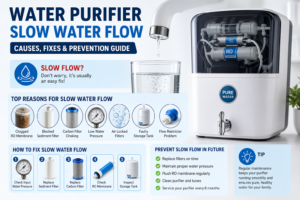
If your purifier is dispensing water slowly, that’s a clear warning sign. If your purifier is also giving weak output, check our complete guide on Water Purifier Slow Water Flow Problem and Fixes.
Tank Not Filling
Does your tank take hours to fill? Low pressure could be the culprit.
Unusual Noises
Humming or vibrating sounds often mean the pump is struggling due to low pressure.
Main Causes of Low Pressure in RO Purifiers
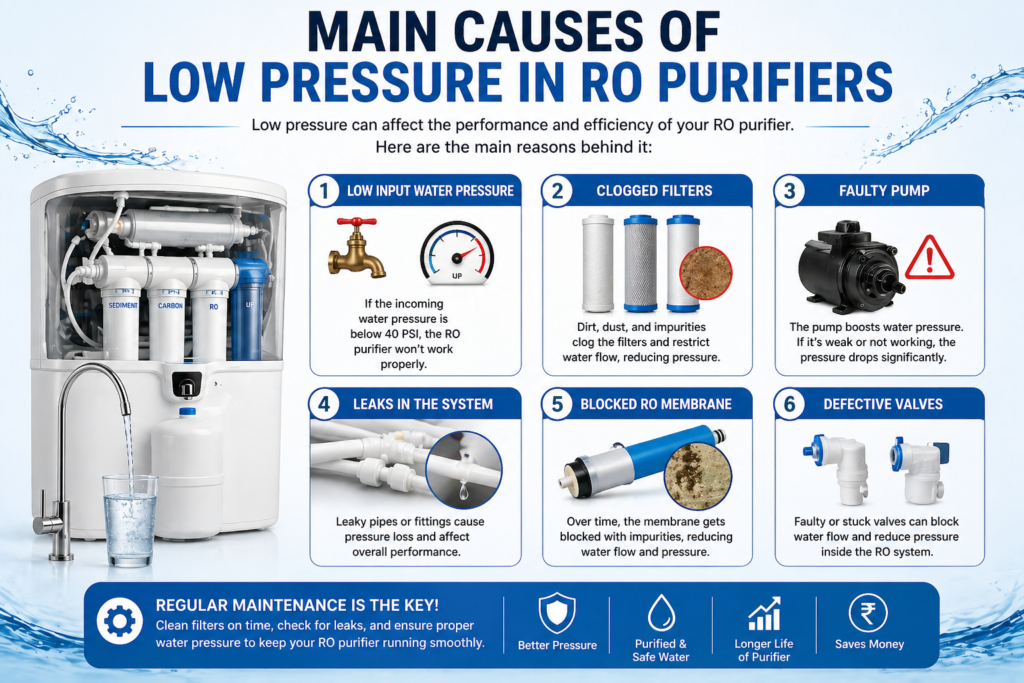
Let’s get to the root of the problem.
Low Input Water Pressure
If your home’s water supply itself is weak, the RO system can’t perform well.
Clogged Filters
Over time, filters collect dirt and sediments — blocking water flow. Clogged filters are one of the most common issues. You can explore all related problems in our guide on Common Water Purifier Problems and Solutions.
Faulty Pump
The booster pump increases pressure. If it fails, pressure drops instantly.
Leaks in the System
Even small leaks can reduce pressure significantly.
Blocked RO Membrane
A dirty or worn-out membrane can restrict water flow.
How to Check Water Pressure at Home
Before fixing anything, confirm the issue.
Simple DIY Methods
- Check tap flow speed
- Compare with other taps
- Observe tank filling time
Using a Pressure Gauge
For accuracy, attach a pressure gauge to your water line. Ideal reading should be above 40 PSI.
Step-by-Step Solutions to Fix Low Pressure
Now let’s fix it.
Clean or Replace Filters
Dirty filters are the #1 cause.
- Sediment filter: every 3–6 months
- Carbon filter: every 6–12 months
Install a Booster Pump
If your area has low supply pressure, a booster pump is a game changer. Booster pumps work by increasing pressure, and understanding how water pumps increase pressure can help you choose the right solution.
Fix Leaks
Inspect pipes and connectors. Tighten or replace damaged parts.
Check Valves
Faulty valves can block water flow. Replace if needed.
When to Replace RO Components
Sometimes cleaning isn’t enough.
Filter Replacement Timeline
- Sediment filter: 6 months
- Carbon filter: 12 months
Membrane Replacement Guide
RO membrane usually lasts 2–3 years, depending on water quality.
Preventing Low Pressure Issues
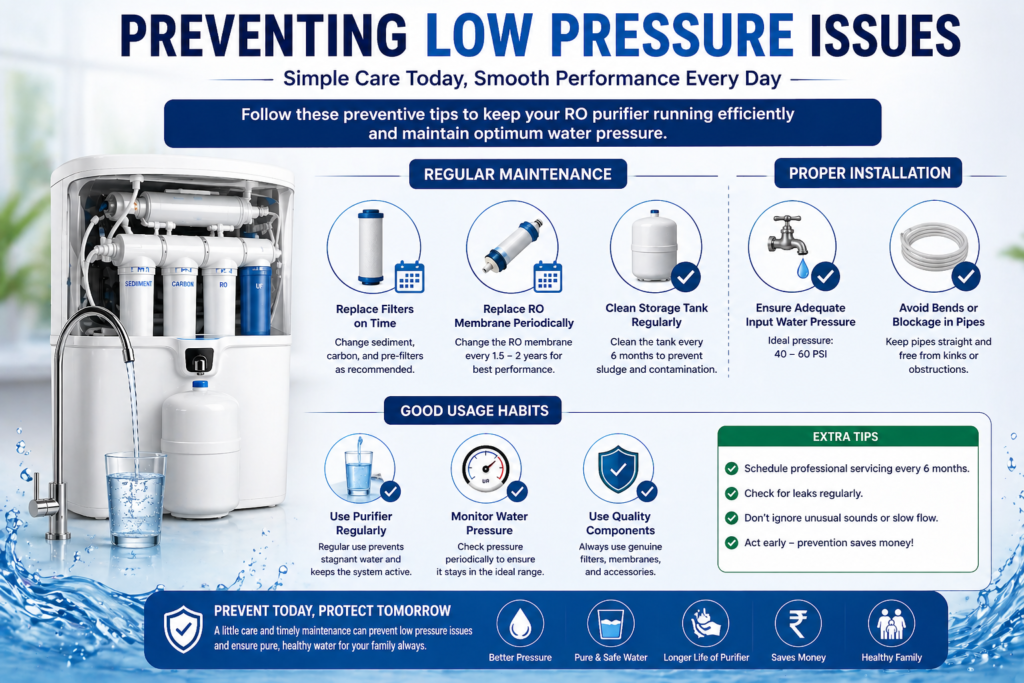
Prevention is always better than repair.
Regular Maintenance Tips
- Schedule servicing every 6 months
- Clean storage tank
- Replace filters on time
Proper Installation
Ensure:
- Correct pipe connections
- Proper water inlet pressure
- No bending or blockage in pipes
Should You Call a Technician?
Here’s the truth — not every problem needs a professional.
Call a technician if:
- Pump isn’t working
- Electrical issues occur
- Pressure remains low after fixes
Otherwise, most issues can be handled at home.
Cost of Fixing Low Pressure in India
Let’s talk money.
- Filter replacement: ₹300–₹1500
- Booster pump: ₹2000–₹4000
- Technician visit: ₹200–₹500
Not too expensive compared to buying a new purifier.
Expert Tip
In more than 70% of cases, low pressure problems are caused by clogged sediment and carbon filters. Replacing these filters on time can prevent most performance issues in RO purifiers.
Conclusion
The RO water purifier low pressure problem might seem serious at first — but in reality, it’s usually caused by simple issues like clogged filters or low input pressure.
Think of your RO system like a car. If you maintain it regularly, it runs smoothly. Ignore it… and problems start piling up.
So don’t wait. Check your purifier today, fix the issue early, and enjoy clean, safe drinking water without interruptions.
H2: FAQs
1. Why is my RO water coming very slowly?
Most likely due to clogged filters or low input water pressure.
2. Can low pressure damage my RO purifier?
Yes, it can strain the pump and reduce system efficiency over time.
3. Do I always need a booster pump?
Only if your water supply pressure is consistently low.
4. How often should I service my RO purifier?
Every 6 months is ideal for smooth performance.
5. Is it safe to use RO with low pressure?
It may still work, but water purification efficiency can decrease.