Is your water purifier taking forever to fill a glass? Or maybe the water flow has become weak like a dripping tap? A water purifier slow water flow problem is one of the most common issues faced by homeowners. The good news? Most of the time, it’s easy to fix.
Water flow from the water purifier being slow doesn’t necessarily mean that there’s a problem with the water purifier. Some of the reasons could be due to clogged filters or blocked filters internally. This guide will show you why this issue happens, how to fix it, and how to avoid it in the future.
Let’s get started.
Quick Answer:
A water purifier slow water flow problem is usually caused by clogged filters, low water pressure, or a blocked RO membrane. In most cases, replacing filters and checking inlet pressure can restore normal water flow within minutes.
What Does Slow Water Flow Mean in a Water Purifier?
Slow water flow simply means your purifier is dispensing water at a much lower speed than usual. You may notice:
- Tank takes too long to fill
- Water trickling instead of flowing
- Weak flow from tap
- Purifier making longer running time
- Less water output per hour
Normally, an RO water purifier fills a tank within 1–2 hours. If it’s taking 3–5 hours, something is restricting the flow.
Is Slow Water Flow Normal?
Sometimes yes — especially in RO purifiers. Reverse Osmosis filtration naturally slows down water because it pushes water through a very fine membrane.
But extremely slow flow is not normal.
RO vs UV vs UF Flow Differences
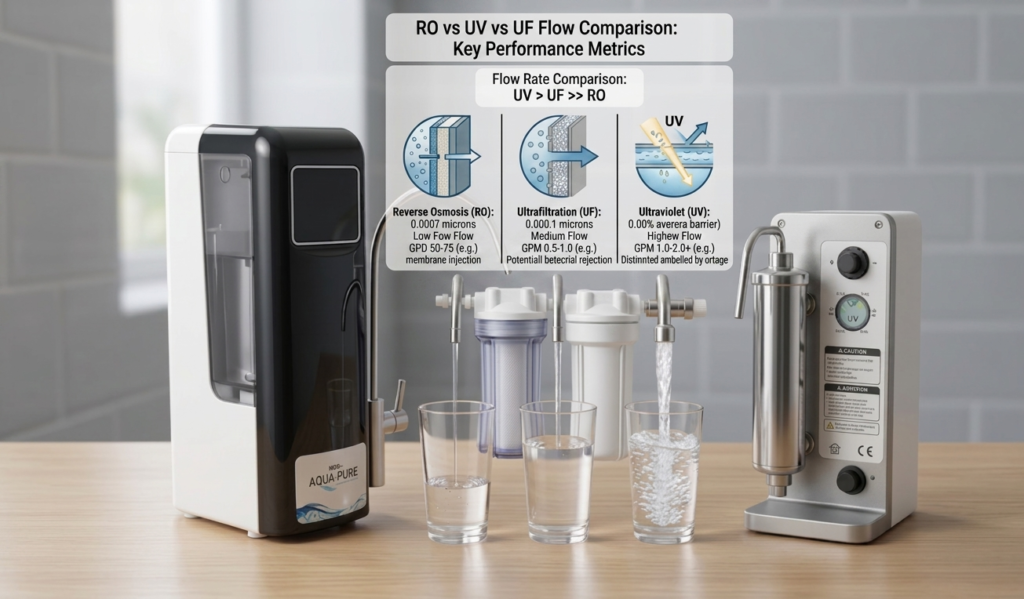
- RO purifier → slowest flow (normal)
- UV purifier → fast flow
- UF purifier → moderate flow
- Gravity purifier → slow but steady
If your RO purifier suddenly becomes slower than before, that’s a sign of a problem.
Storage Tank vs Direct Flow Systems
Storage tank purifiers fill slowly but dispense quickly.
Direct flow purifiers give water instantly but depend on pressure.
If both filling and dispensing are slow, the issue is internal.
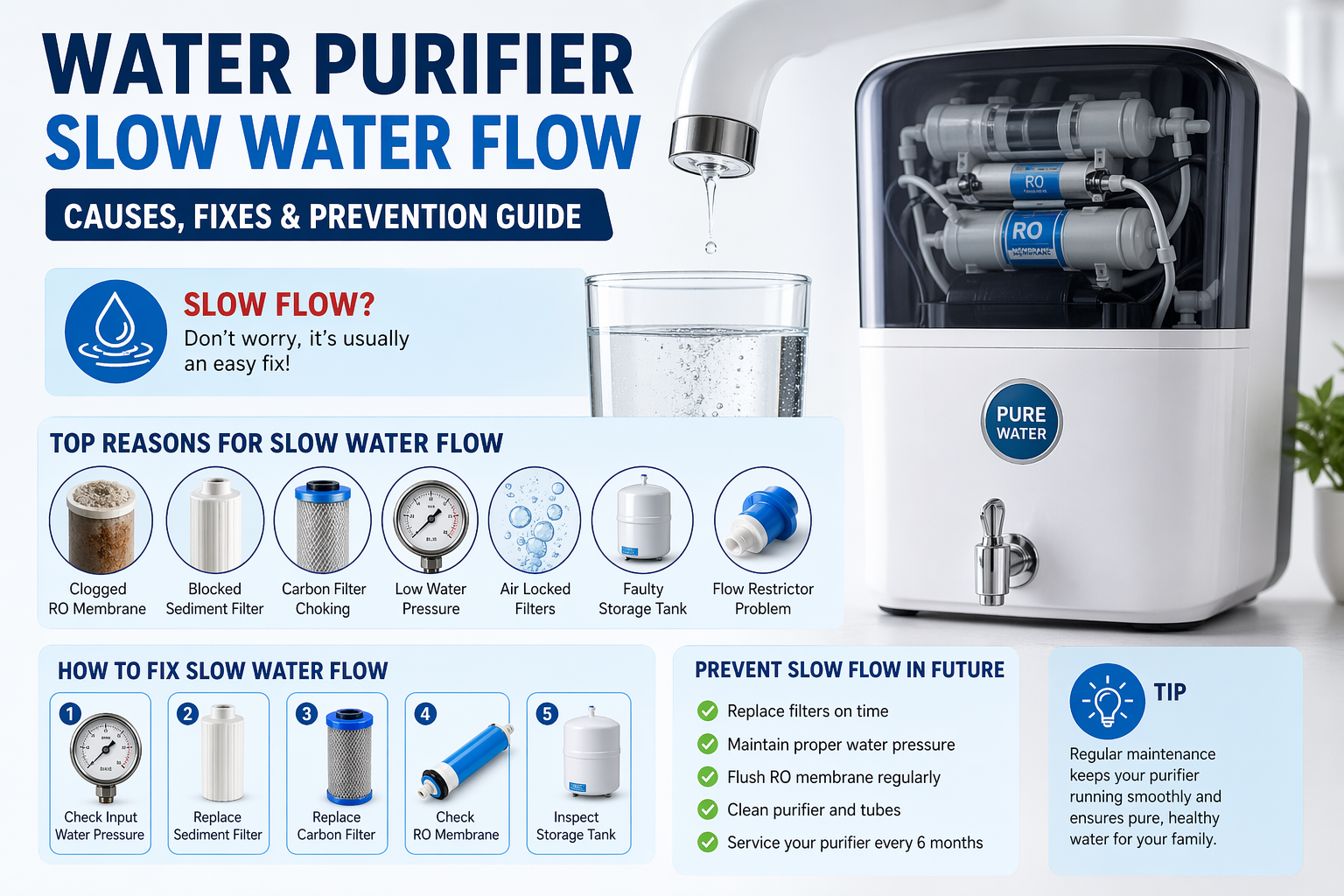
Top Reasons Your Water Purifier Has Slow Water Flow
Here are the most common causes.
1.Clogged RO Membrane
The RO membrane is the core component of your water purifier. With regular use, it can gradually become clogged due to accumulated impurities such as dissolved solids, minerals, and other contaminants.
- TDS particles
- Hard water minerals
- dirt and sand
- bacteria buildup
When this occurs, water has difficulty moving through the membrane, which reduces the overall flow rate.
Result? Very slow flow. If your purifier has completely stopped dispensing water, read our detailed guide on RO water purifier no water flow causes and solutions.
2.Blocked Sediment Filter
The sediment filter is designed to trap impurities like dirt, dust, and sand particles before they enter the purifier.
- Water pressure drops
- Flow becomes weak
- Tank fills slowly
This is one of the most common causes of reduced water flow in a purifier.
3.Carbon Filter Choking
Carbon filters remove chlorine and smell. But they also trap particles.
When clogged:
- Water output decreases
- Flow becomes inconsistent
- purifier works longer
Replacing this often fixes the issue instantly.
4.Low Water Pressure
RO purifiers require minimum 25–40 PSI pressure.
If your home water pressure is low:
- RO membrane cannot function properly
- Water flow becomes slow
- Tank takes long to fill
Low water pressure is especially common in apartments, particularly on higher floors.
5.Air Locked Filters
Sometimes air gets trapped inside filters after:
- filter replacement
- maintenance
- water supply interruption
Air blocks water movement causing slow flow.
6.Faulty Storage Tank
If tank bladder pressure drops:
- water comes slowly from tap
- tank fills but flow weak
- output decreases
This is an often-overlooked problem that many users don’t notice.
7.Flow Restrictor Problem
The flow restrictor controls water speed. If blocked:
- waste water increases
- pure water decreases
- slow output
This part is small but important.
Quick Troubleshooting Table
Water Purifier Slow Water Flow – Causes vs Solutions
| Problem | Possible Cause | Water Flow Impact | Quick Fix | Difficulty |
|---|---|---|---|---|
| Very slow tank filling | Clogged RO membrane | Extremely slow | Replace RO membrane | Medium |
| Weak water from tap | Low tank pressure | Slow output | Refill tank air pressure | Medium |
| Slow flow suddenly | Blocked sediment filter | Reduced flow | Replace sediment filter | Easy |
| Water trickling only | Carbon filter choking | Low water output | Replace carbon filter | Easy |
| Purifier running long time | Low input water pressure | Slow tank fill | Install booster pump | Medium |
| Tank not filling fully | Faulty auto shut-off valve | Incomplete fill | Replace valve | Hard |
| Flow reduced after service | Air locked filters | Inconsistent flow | Flush purifier | Easy |
| High waste water | Flow restrictor issue | Low pure water | Clean restrictor | Medium |
| Slow after 1 year use | Dirty internal tubes | Gradual slow flow | Clean tubes | Medium |
| Weak flow only from tap | Tank bladder problem | Slow dispensing | Check tank pressure | Hard |
How to Fix Slow Water Flow in Water Purifier
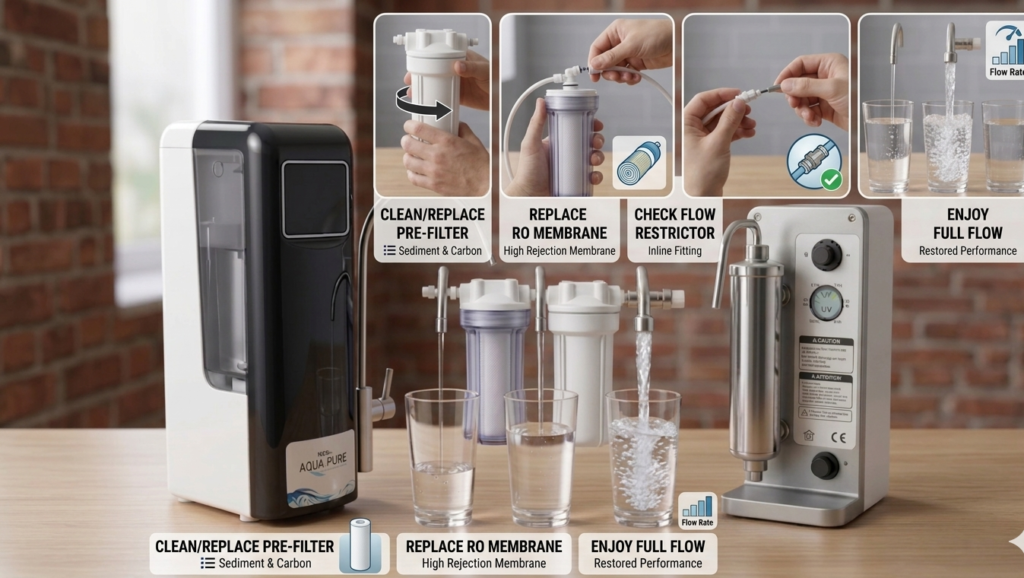
Follow these steps one by one.
Step 1: Check Input Water Pressure
First, check your inlet water.
Signs of low pressure:
- thin pipe flow
- slow tap speed
- purifier running continuously
Solution:
Install a booster pump.
Step 2: Replace Sediment Filter
If filter is dirty:
- replace every 3–6 months
- improves pressure instantly
- increases flow speed
This is the easiest fix.
Step 3: Replace Carbon Filter
Change carbon filter every:
- 6 months normal usage
- 3 months hard water areas
This restores flow quickly.
Step 4: Check RO Membrane
RO membrane lasts:
- 12–24 months normally
- less in high TDS water
If clogged, replace it.
Symptoms:
- slow tank filling
- high waste water
- bad taste
If your water also tastes bad along with slow flow, check our guide on why RO water tastes bad and how to fix it.
Step 5: Inspect Storage Tank
Check tank pressure:
- empty tank completely
- press air valve
- add air if needed
This improves output speed.
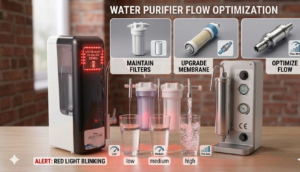
How to Increase Water Purifier Flow Speed
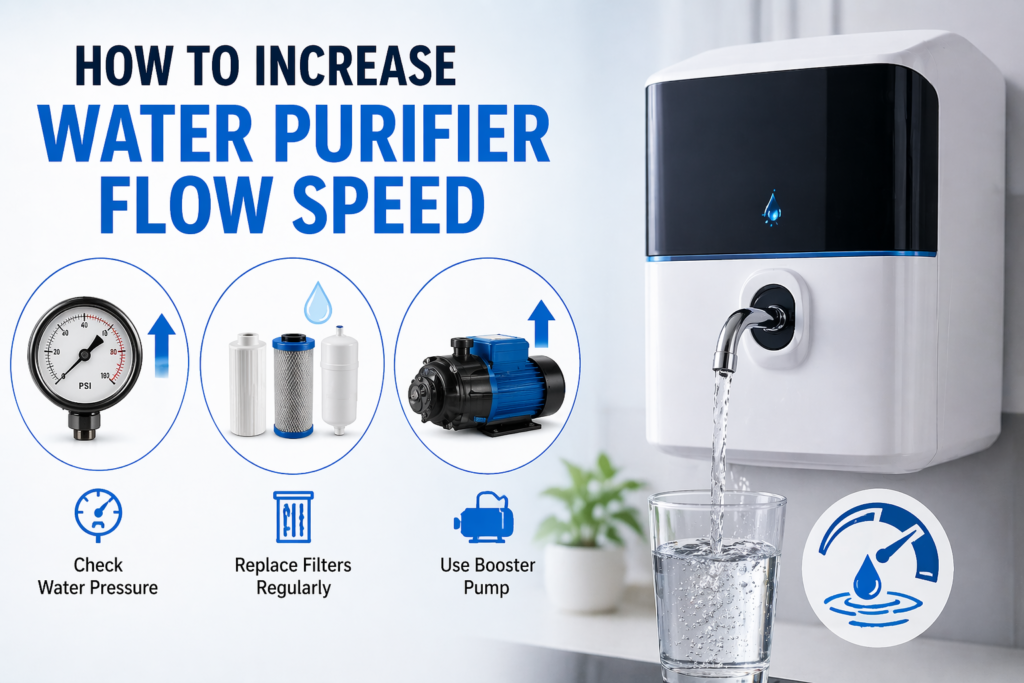
Want faster flow? Try these.
Install Booster Pump
Best solution for low pressure homes.
Benefits:
- faster tank filling
- better purification
- improved flow
Clean Internal Tubes
Over time pipes accumulate:
- algae
- dirt
- mineral deposits
Cleaning improves water speed.
Flush the RO Membrane
Membrane flushing removes:
- salt buildup
- dirt particles
- hardness minerals
This improves flow instantly.
Water Purifier Slow Tank Filling Problem
This is slightly different.
Tank Takes Too Long to Fill
Possible reasons:
- low pressure
- clogged filters
- blocked membrane
- faulty pump
Tank Not Filling Fully
This usually means:
- auto shut off valve issue
- tank pressure low
- membrane problem
When to Replace Filters for Better Flow
Follow this schedule:
- Sediment filter → 3–6 months
- Carbon filter → 6 months
- RO membrane → 12–24 months
- Post carbon → 12 months
Regular replacement keeps flow strong.
Signs Your RO Membrane Is Blocked
Watch for these symptoms:
- slow water flow
- tank fills very slowly
- increased waste water
- TDS not reducing
- bad taste
If you notice 2–3 signs, replace membrane.
How Often Should Water Purifier Flow Be Checked
Check every:
- 1 month – basic check
- 3 months – filter inspection
- 6 months – full service
This prevents slow flow issues.
Preventing Slow Water Flow in Future
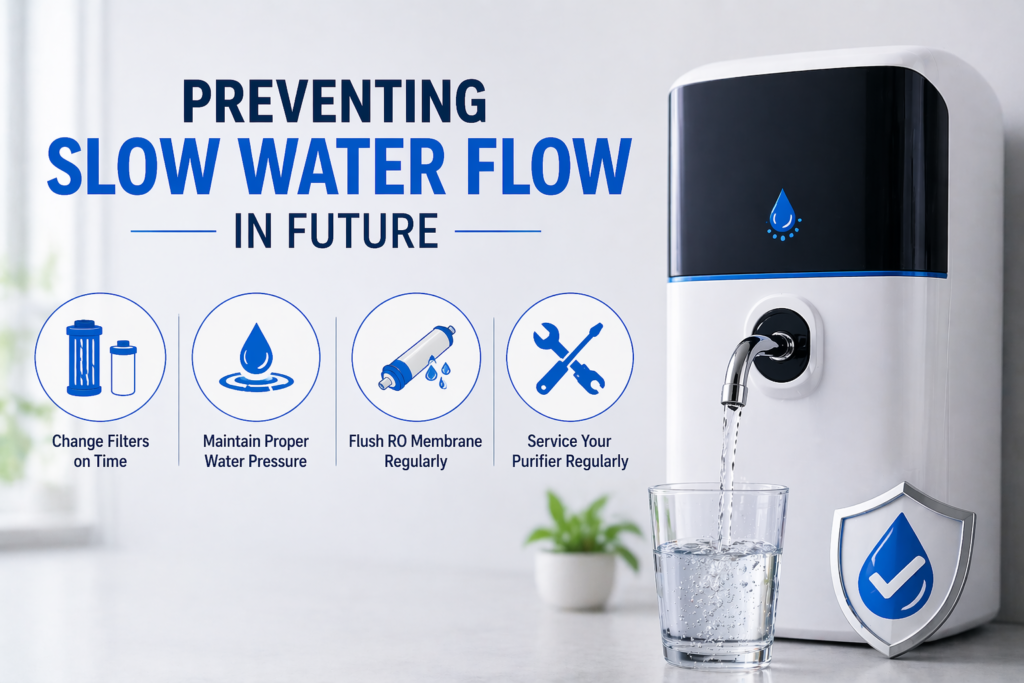
Here’s how to avoid the problem:
- Replace filters on time
- Clean purifier yearly
- Use booster pump if needed
- Flush membrane monthly
- Check inlet pressure
- Use pre-filter for hard water
These steps keep flow normal.
When to Call Technician
Call professional if:
- flow still slow after filter change
- pump not working
- water leaking
- loud noise from purifier
- no water output
Technician can diagnose internal issues. If your purifier is making unusual sounds along with slow flow, read our complete guide on water purifier making noise.
Expert Tip
In over 80% of cases, slow water flow is caused by delayed filter replacement. Regular servicing not only improves flow but also increases the lifespan of your purifier.
Conclusion
Slow water flow from a water purifier may be annoying at times, but there are easy ways of addressing this. Slow flow occurs due to blocked filters, water pressure, or RO membrane clogging. The best way of maintaining your water purifier is ensuring that it gets adequate maintenance services including timely replacement of filters and appropriate pressure levels. When all else fails, seeking help from a professional technician becomes necessary. Taking care of your purifier will not only improve the flow of water but also guarantee you quality water that is free from diseases.
FAQs
1.Why is my water purifier flowing slowly?
Filter sedimentation, carbon, or RO membrane blockage may cause this.
2.How can I improve flow from water purifier?
Ensure filters are changed, increase water pressure, clean pipes, and add a booster pump.
3.Is it normal for water purifier to have slow flow?
A little slow flow is normal, but very slow flow is abnormal.
4.How many hours should RO tank take to fill?
One or two hours; more than three hours may mean something wrong.
5.Does low water pressure affect water purifier flow?
Yes, water purifier requires minimum water pressure to function.