Buying a water purifier sounds simple—until you enter the world of RO, UV, and UF technologies.
Suddenly, every brand starts throwing technical terms at you like confetti. Reverse osmosis, ultraviolet purification, ultrafiltration membranes, TDS controllers—what does it all even mean?
And here’s the biggest question:
Which one is actually right for your home?
Choosing the wrong purifier is like buying winter clothes for a beach vacation—it simply doesn’t fit your needs.
In this guide, we’ll break down RO vs UV vs UF water purifier technologies in the simplest possible way so you can confidently pick the right purifier for your family.
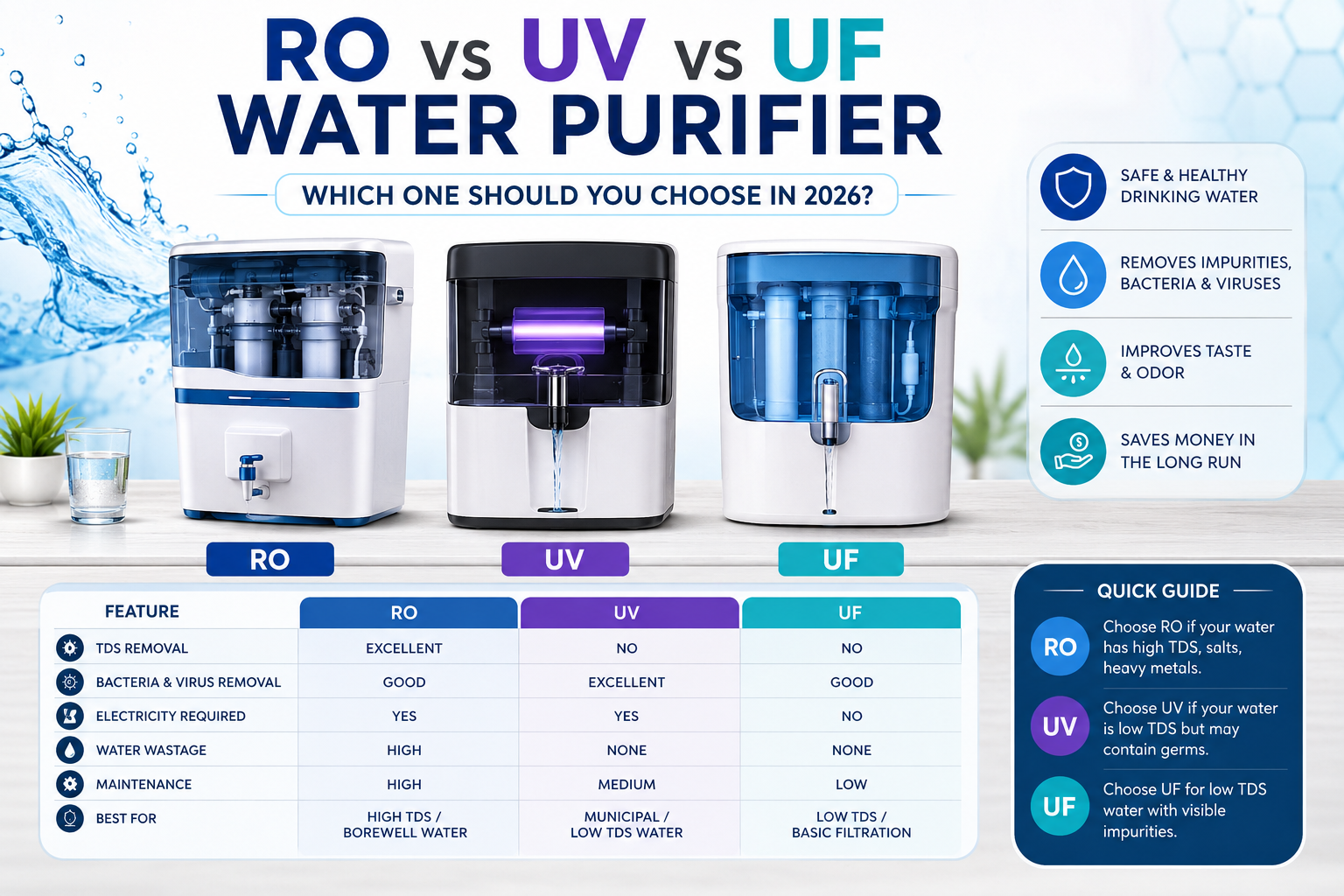
Quick Comparison Table
| Feature | RO | UV | UF |
|---|
| Removes TDS | Yes | No | No |
| Removes Bacteria & Viruses | Yes | Yes | Partial |
| Removes Heavy Metals | Yes | No | No |
| Works Without Electricity | No | No | Yes |
| Water Wastage | High | None | None |
| Best For | Borewell Water | Municipal Water | Low TDS Water |
| Maintenance Cost | High | Medium | Low |
Why Choosing the Right Water Purifier Matters
Water may look clean, but appearances can be deceptive.
Your water may contain:
- Dissolved salts
- Heavy metals
- Bacteria
- Viruses
- Sediments
- Chlorine
- Harmful chemicals
Different homes receive water from different sources:
- Borewell water
- Municipal corporation supply
- Tanker water
- Well water
That’s why a “one-size-fits-all” purifier doesn’t exist.
Indian households can also refer to BIS drinking water standards for acceptable drinking water limits.
What Is an RO Water Purifier?
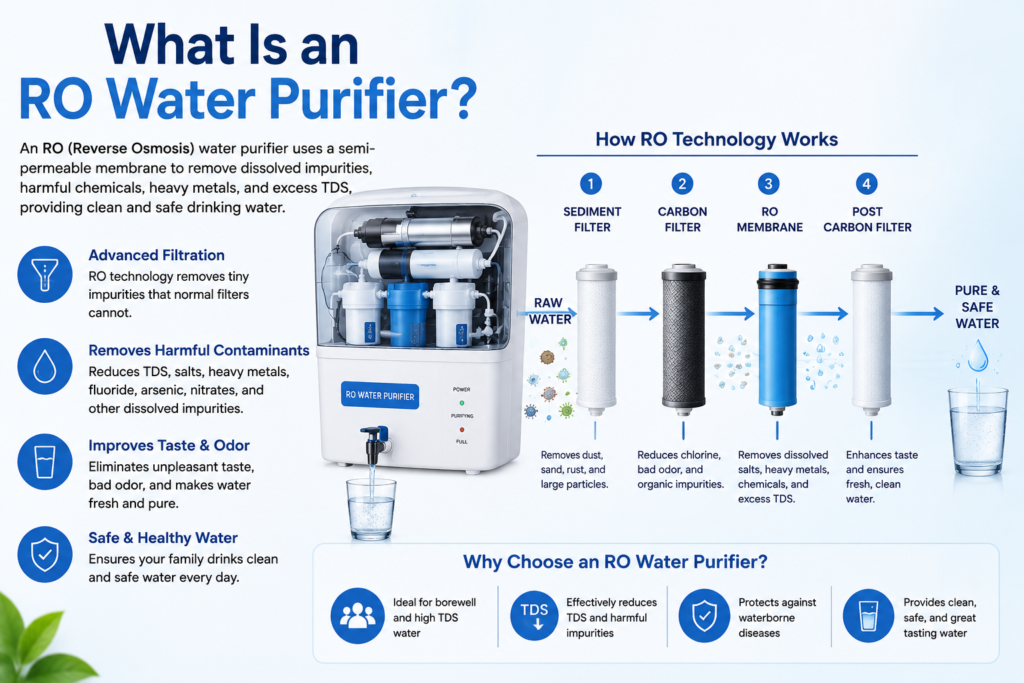
RO stands for Reverse Osmosis.
It uses a semi-permeable membrane to remove dissolved impurities from water.
How Reverse Osmosis Works
Water passes through a membrane with extremely tiny pores.
This membrane blocks:
- Lead
- Arsenic
- Fluoride
- Excess TDS
- Heavy metals
- Dissolved salts
The result?
Cleaner and safer drinking water.
Pros of RO Purifiers
✔ Removes high TDS
✔ Removes harmful metals
✔ Suitable for borewell water
✔ Improves taste of salty water
While RO purifiers remove high TDS effectively, they may sometimes develop pressure-related issues. Here’s how to fix common RO water purifier low pressure problems.
Cons of RO Purifiers
✘ Wastes water
✘ Requires electricity
✘ Higher maintenance cost
✘ Can remove essential minerals
Think of RO like a strict security guard—it removes almost everything.
What Is a UV Water Purifier?
UV stands for Ultraviolet purification.
It uses ultraviolet rays to kill harmful microorganisms.
How UV Purification Works
A UV purifier uses powerful ultraviolet rays to neutralize harmful microorganisms present in water, making it safer to drink.
- Bacteria
- Viruses
- Germs
- Microorganisms
It does not remove dissolved impurities.
Pros of UV Purifiers
✔ Kills bacteria and viruses
✔ No water wastage
✔ Fast purification process
✔ Lower maintenance cost than RO
Cons of UV Purifiers
✘ Cannot remove TDS
✘ Doesn’t remove heavy metals
✘ Needs electricity
UV is like using sunlight-powered disinfection—but in a compact machine.
What Is a UF Water Purifier?
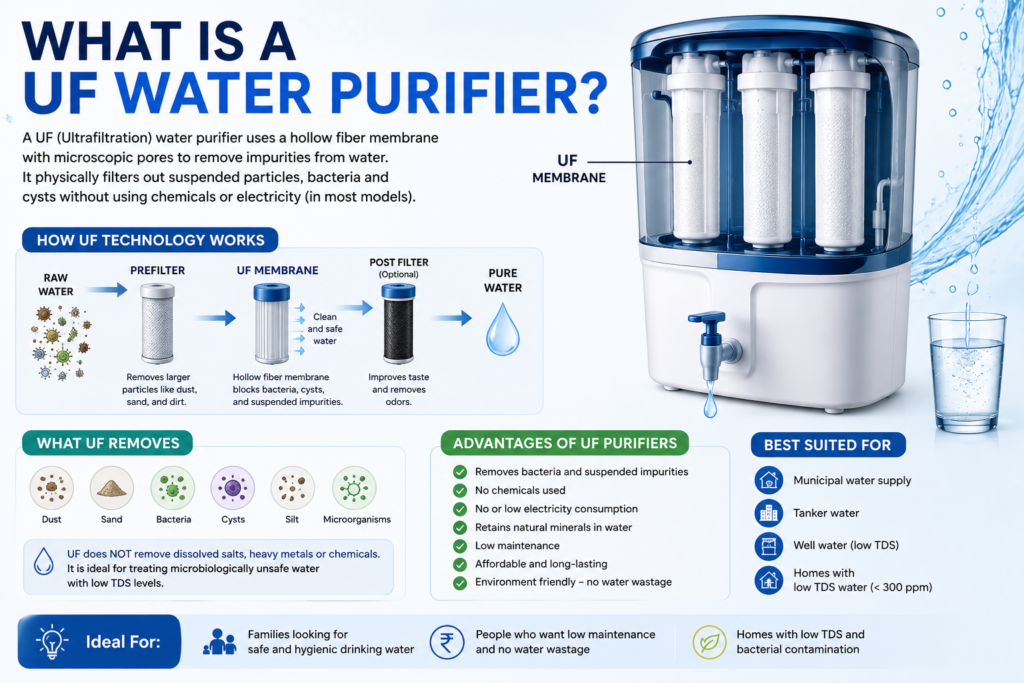
UF stands for Ultrafiltration.
It works through a filtration membrane that traps unwanted particles and contaminants from water.
How UF Technology Works
UF membranes block:
- Dust
- Sand
- Bacteria
- Suspended particles
However, UF cannot remove dissolved salts.
Pros of UF Purifiers
✔ Works without electricity
✔ Affordable
✔ Removes visible impurities
✔ Low maintenance
Cons of UF Purifiers
✘ Not effective for high TDS water
✘ Cannot remove dissolved chemicals
✘ Limited purification capabilities
UF is like a fine kitchen strainer—it catches particles but not dissolved substances.
RO vs UV vs UF: Key Differences Explained
1.TDS Removal
- RO: Excellent
- UV: No
- UF: No
For water with elevated TDS levels, RO technology is generally recommended for better purification.
2.Bacteria and Virus Removal
- RO: Good
- UV: Excellent
- UF: Moderate
UV performs best here.
3.Electricity Requirement
- RO: Yes
- UV: Yes
- UF: No
Frequent power cuts? UF may help.
4.Water Wastage
- RO: High
- UV: None
- UF: None
RO systems usually waste some water during purification.
5.Maintenance Cost
RO maintenance is generally the highest due to membrane replacement.
UV falls in the middle.
UF is usually the cheapest.
Which Water Purifier Technology Should You Choose?
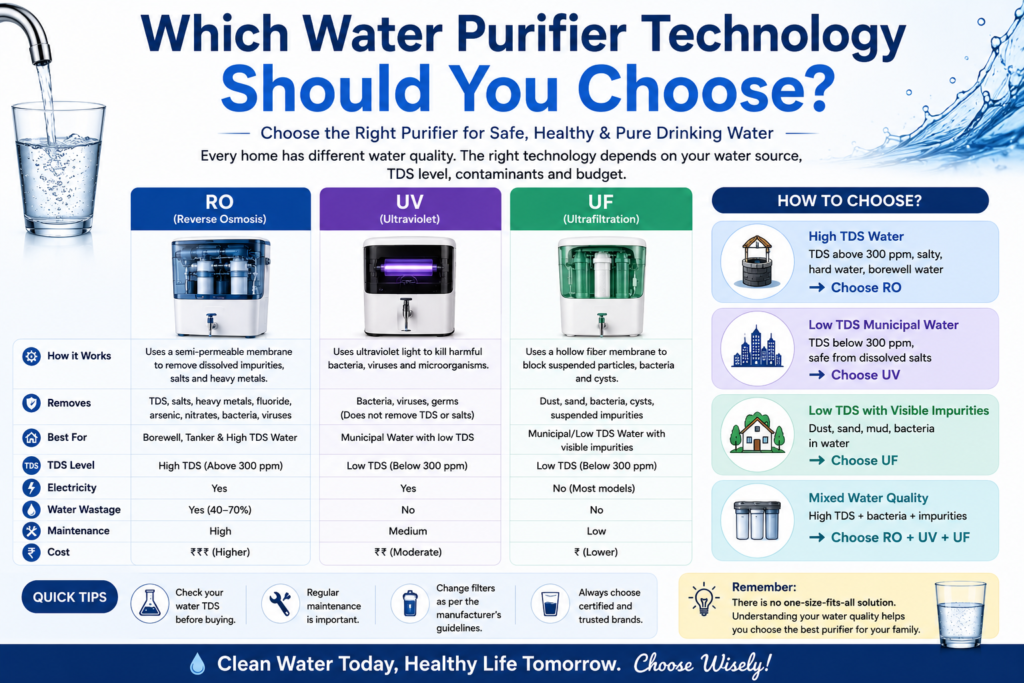
Still confused? Here’s the easiest way to decide.
Choose an RO purifier if:
- Your water TDS is above 300 ppm
- You use borewell or tanker water
- Water tastes salty or hard
Choose a UV purifier if:
- You receive municipal water
- TDS is already low
- You mainly want protection from bacteria and viruses
Choose a UF purifier if:
- You want a purifier without electricity
- Water TDS is low
- You need basic filtration only
Choose RO+UV+UF if:
- Your water quality changes frequently
- You want maximum purification
- You need protection from both dissolved impurities and germs
What’s the Best Water Purifier for Homes Using Borewell Water?
Borewell water often contains:
- High TDS
- Salts
- Heavy metals
Best option: RO purifier
Many Indian households using borewell water prefer RO systems.
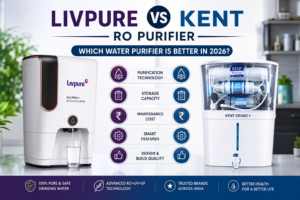
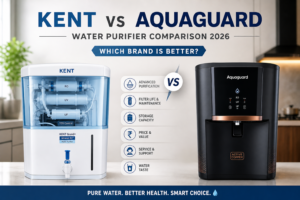
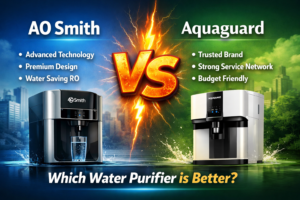
If you’re comparing brands, check our detailed guides on Kent vs Aquaguard, Livpure vs Kent, and AO Smith vs Aquaguard before making a decision.
Which Water Purifier Is Best for Municipal Water?
Municipal water often has lower TDS but may contain bacteria.
Best option: UV purifier
It kills microorganisms effectively.
Which Water Purifier Is Best for Low TDS Water?
If your water already has low TDS:
RO may over-purify it.
A UF or UV purifier may be a better option.
RO vs UV vs UF Cost Comparison
RO Purifier Cost
₹10,000 – ₹25,000+
UV Purifier Cost
₹6,000 – ₹15,000
UF Purifier Cost
₹4,000 – ₹10,000
Maintenance costs also vary depending on brand and filter replacement frequency.
Popular brands in India include Kent, Aquaguard, Livpure, AO Smith, and Pureit.
Can You Buy a Combined RO+UV+UF Purifier?
Yes—and many modern purifiers combine all three technologies.
These systems offer:
- RO for TDS reduction
- UV for germ protection
- UF for particle filtration
They’re ideal for mixed water quality conditions.
Many premium models from Kent and Aquaguard offer multi-stage purification.
How to Check Your Water Quality Before Buying
Before purchasing a purifier:
Use a TDS Meter
Check dissolved solids in your water.
- Below 200 ppm → UV/UF may work
- Above 300 ppm → RO recommended
Test for Contaminants
You can also request local water testing.
You can also review official drinking water safety recommendations from the World Health Organization before choosing a purifier.
Common Mistakes People Make While Buying Water Purifiers
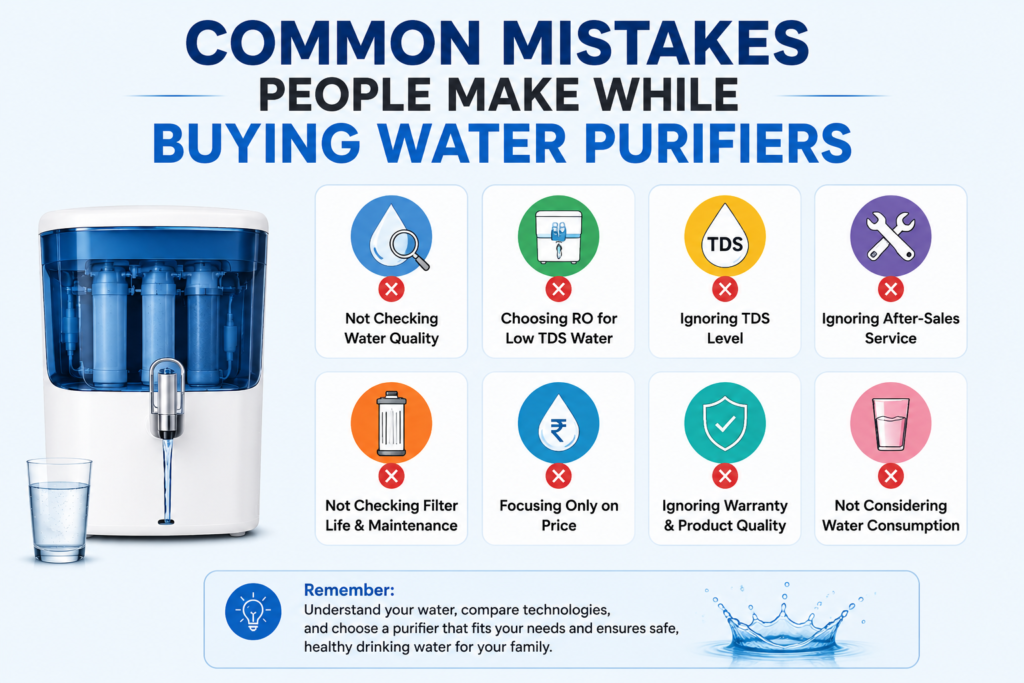
Buying RO for Low TDS Water
This is extremely common.
RO may unnecessarily remove healthy minerals.
Ignoring Maintenance Costs
A cheap purifier can become expensive later.
Not Checking Water Source
Always identify whether your water comes from:
- Borewell
- Tanker
- Municipal supply
Best Water Purifier Technology for Indian Homes
There’s no universal winner.
Here’s the quick answer:
- High TDS water → RO
- Low TDS municipal water → UV
- Basic filtration needs → UF
- Mixed contamination → RO+UV+UF
Simple.
Conclusion
When comparing RO vs UV vs UF water purifiers, the best choice depends entirely on your water quality.
- If your water contains excess salts or high TDS levels, an RO purifier is usually the best option.
- If your municipal water has biological contamination concerns, UV works well.
- If you need budget-friendly filtration without electricity, UF can be a smart pick.
Don’t buy based on advertisements.
Buy based on your water source.
That’s the real secret.
FAQs
1.Is RO better than UV?
Not always. RO is better for high TDS water, while UV is better for killing microorganisms.
2.Can UV purifier remove salts?
No, UV cannot remove dissolved salts.
3.Does UF work without electricity?
Yes,mostUF purifiers work without electricity.
4. Which purifier is best for borewell water in India?
RO purifiers are usually best for borewell water due to high TDS.
5.IsRO+UV+UF worth buying?
Yes, if your water quality changes frequently or you want comprehensive purification.