Introduction
You open your RO water purifier faucet expecting clean drinking water—but nothing comes out. No flow, no sound… just frustration.
If you’re facing an RO water purifier no water flow problem, you’re not alone. This is one of the most common issues homeowners face, and the good news is—most of the time, it’s easy to fix without calling a technician.
In many cases, the problem is caused by simple issues like clogged filters, low water pressure, or minor component faults. With the right approach, you can identify the cause and fix it within minutes.
In this article, I will cover:
- Why RO purifier does not have water flow
- DIY solutions
- Troubleshooting steps
- When to call service
- Prevention tips for the future
Let’s begin with the basics. To understand all related issues, you can also read our complete guide on common water purifier problems and solutions.
Why is my RO water purifier not dispensing water?
RO purifiers may stop water flow due to clogged filters, low pressure, faulty pump, or a blocked membrane. Most issues can be fixed at home easily.
If your purifier is completely not working, check our detailed guide on water purifier not working causes and solutions.
Path of Water Flow in RO Purifier
Water travels through these parts:
- Input water supply line
- Sediment filter
- Carbon filter
- RO Membrane
- Water storage tank
- Post-carbon filter
- Faucet output
If any one part gets clogged…water flow stops.
That’s simple.
Why There Is No Water Flow in Your RO Water Purifier
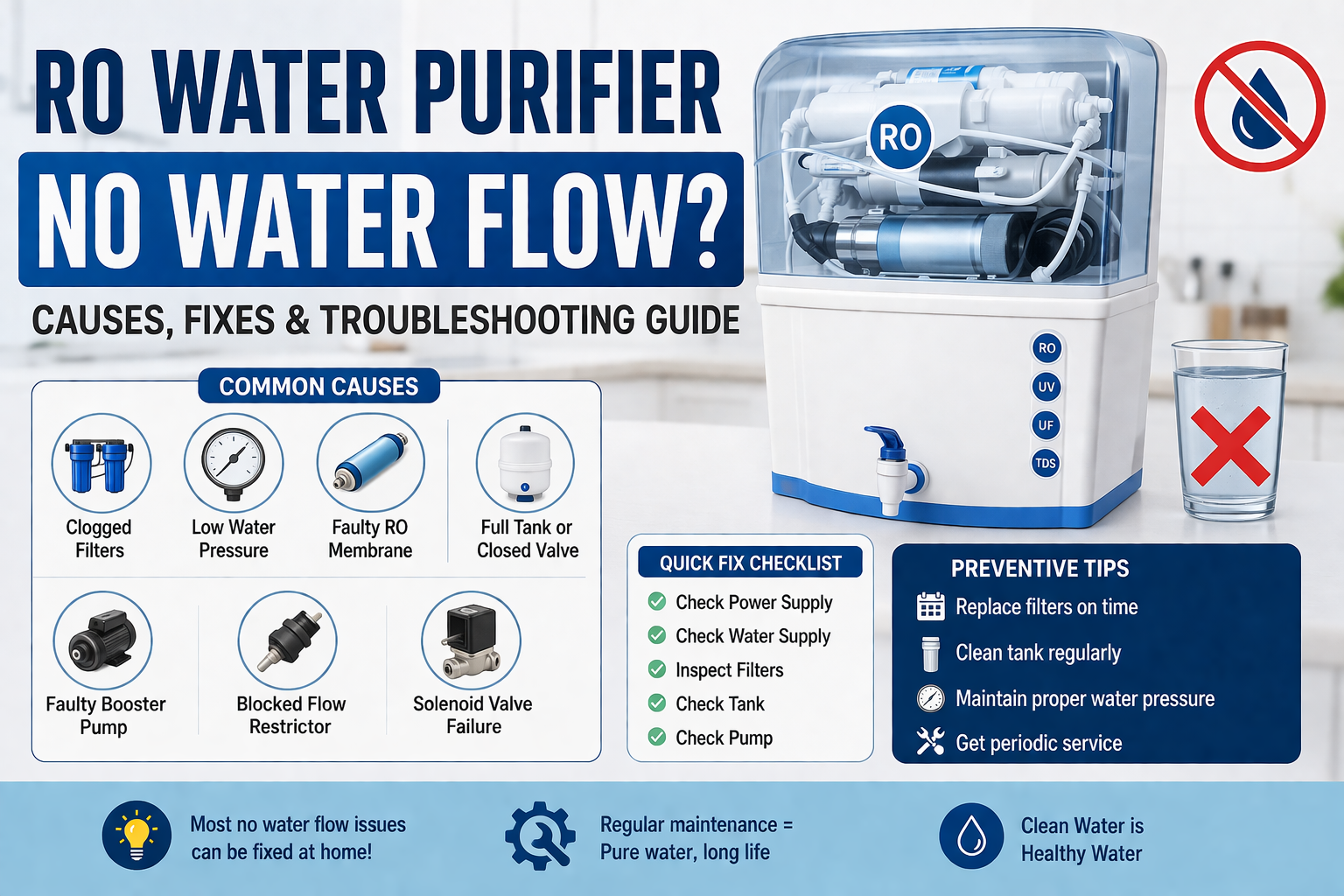
Below are the most common causes.
1. Clogged Sediment Filter
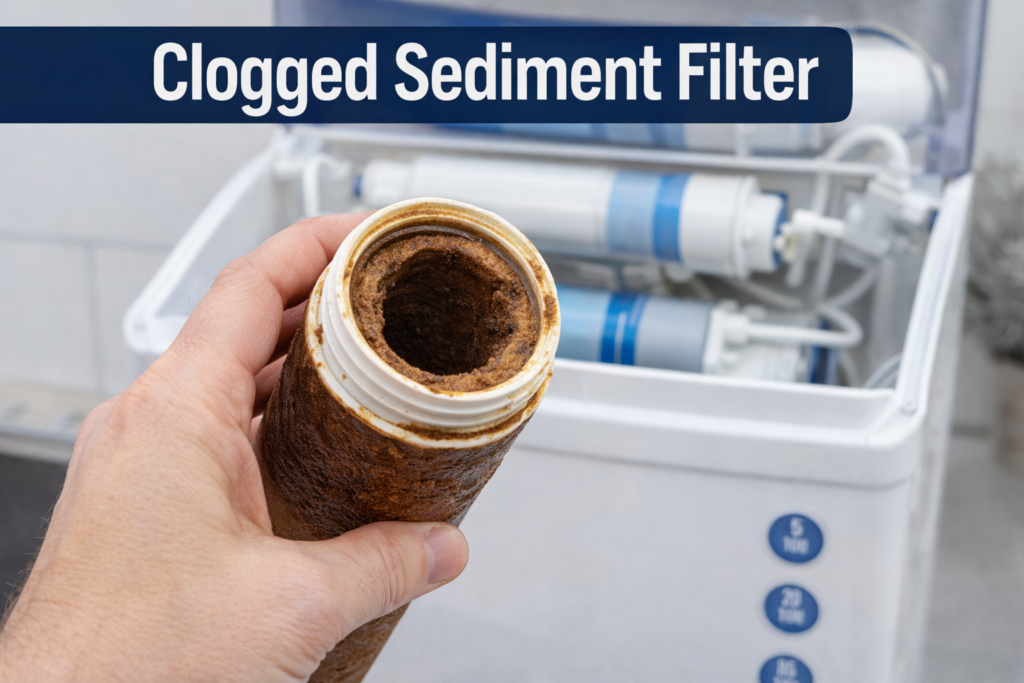
This is the leading cause of lack of water flow.
Sediment filters catch:
- Sand
- Dirt
- Rust
- Mud
With time, they will be fully blocked, preventing water from flowing through them.
How to fix: Change sediment filter every 3-6 months.
2. Clogged Carbon Filter
Carbon filters:
- Remove chlorine
- Eliminate bad taste
- Neutralize odor
- Remove chemicals
However, they will eventually clog.
When carbon filter gets blocked, water flow becomes:
- Very slow
- Completely stops
How to fix: Replace carbon filter every 6 months.
3. Defective RO Membrane
The RO membrane is the main component of your purifier.
If there is:
- Choke in membrane
- Membrane is dirty
- Membrane is old
- Damage to membrane
Water cannot pass through.
Symptoms:
- No water flow
- Slow tank filling
- Constantly draining
How to fix: Replace RO membrane every 12-18 months. A damaged membrane not only blocks water flow but can also affect taste. If your RO water tastes unusual, check our guide on RO water taste bad to fix taste-related issues.
4. Low Water Pressure
RO systems require minimum pressure to operate.
If the pressure is too low:
- Pump cannot push water
- Membrane blocks water flow
- Tank cannot be filled
Required minimum pressure: 40-60 PSI
Common causes:
- Overhead tank is empty
- Weak municipal water supply
- Blocked pipes
5. Faulty Booster Pump
If your RO has a booster pump, and it’s not working:
- No water goes inside
- No tank filling
- No output flow
Check for:
- Pump noise missing
- No vibration
- No water movement
If the pump is silent, it may be faulty. If your pump is running but producing humming or vibration, read our complete guide on water purifier making noise to diagnose the issue.
6. Tank Full or Tank Valve Closed
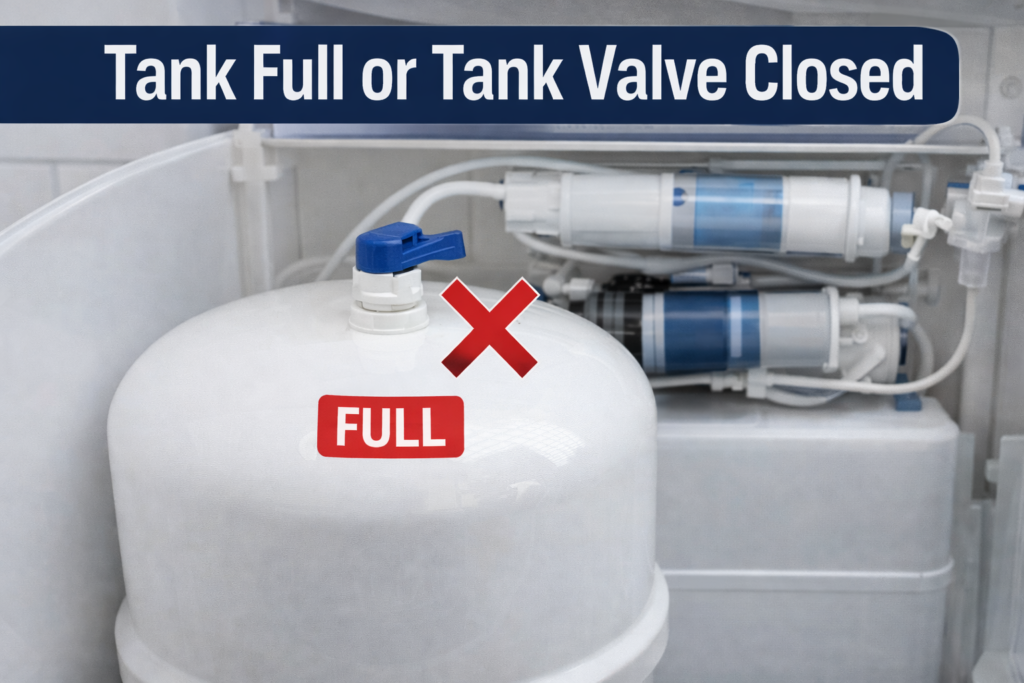
Sometimes the problem is very simple.
Check:
- Tank valve closed
- Tank full
- Air pressure issue
If the tank is full, the purifier stops automatically.
But the tap may still not give water if the tank valve is closed.
7. Blocked Flow Restrictor
Flow restrictor controls reject water.
If blocked:
- Pressure imbalance
- Water stops flowing
- Membrane chokes
Technicians often check this first.
8. Solenoid Valve Failure
Solenoid valves control water entry.
If it fails:
- No water enters system
- No tank filling
- No output
This usually happens due to electrical issues.
Step-by-Step Troubleshooting Guide
Follow this in order.
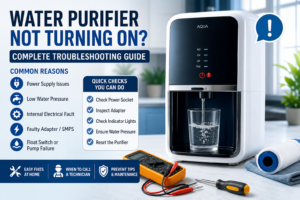
Step 1: Check Power Supply
Is RO getting power?
Check:
- Adapter
- Plug
- Switch
- Indicator light
No power = no pump = no water.
Step 2: Check Water Supply
Ensure:
- Input valve open
- Water available
- Pipe not bent
Try disconnecting the input pipe to confirm water flow.
Step 3: Inspect Filters
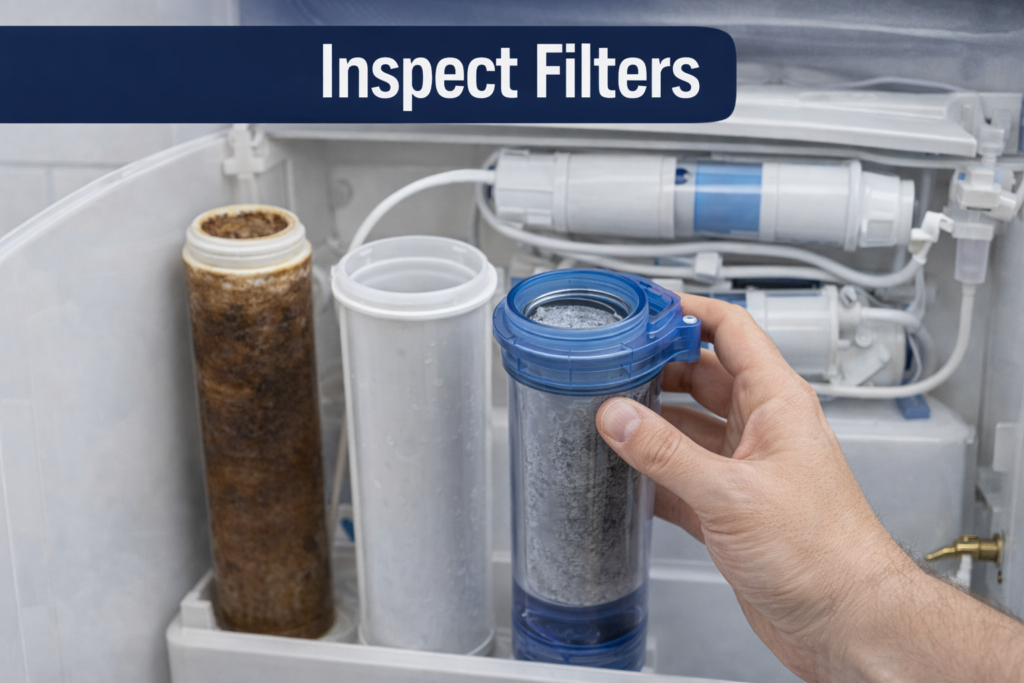
If filters are old:
Replace:
- Sediment filter
- Carbon filter
This alone solves 70% of no flow issues.
Step 4: Check Tank
Open tank valve.
Then:
- Tap tank
- Check weight
- Listen for water
If tank empty → filling issue
If tank full → output issue
Step 5: Check Pump
Turn ON RO and listen.
No sound?
The pump may be faulty.
Low humming?
Pressure problem.
RO Water Purifier No Water Flow But Tank Full
This is a different issue.
If tank is full but no water:
Possible causes:
- Faucet blocked
- Post carbon filter blocked
- Tank valve closed
- Pipe kinked
Quick fix:
- Disconnect faucet pipe
- Check flow
- Replace post filter
RO Water Purifier No Water Flow After Service
This happens frequently.
Reasons:
- Air lock in system
- Loose pipe connection
- Valve closed
- Filters fitted incorrectly
Solution:
- Turn OFF RO
- Close tank valve
- Open faucet
- Wait 5 minutes
- Restart RO
Air lock clears.
RO Water Purifier No Water Flow From Tap
If tank filled but tap dry:
Check:
- Faucet blockage
- Pipe bend
- Post filter choke
Sometimes the faucet gets clogged with carbon dust.
Cleaning solves it instantly.
How to Fix Low Water Pressure in RO
Try these:
- Install booster pump
- Raise overhead tank
- Clean input filter
- Use pressure regulator
A booster pump is the best solution.
When to Change Filters?
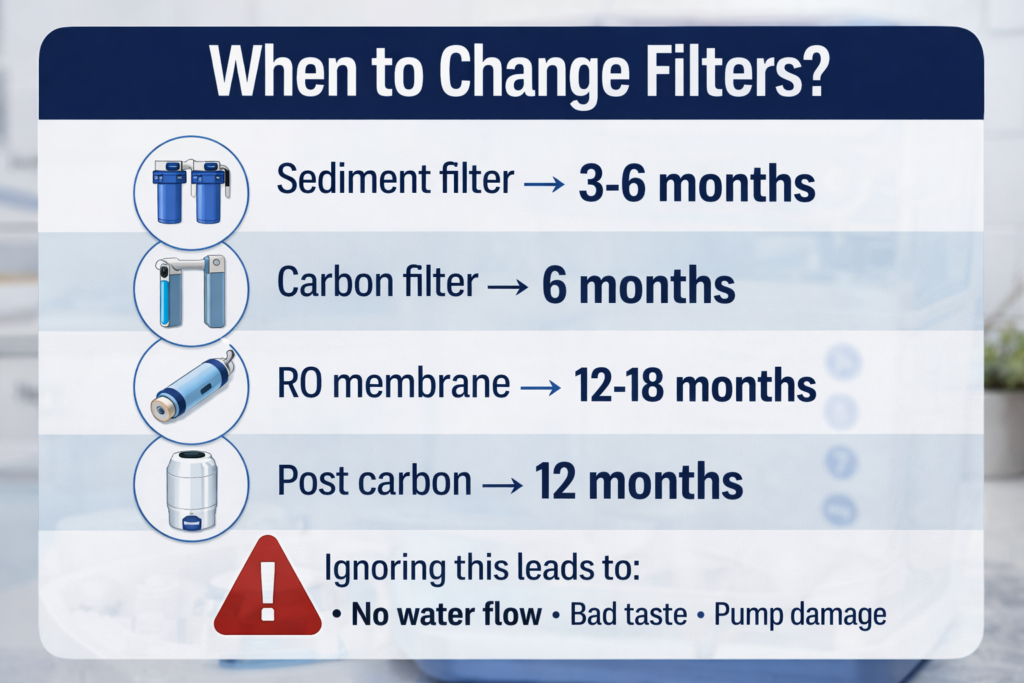
Remember the following:
- Sediment filter → 3-6 months
- Carbon filter → 6 months
- RO membrane → 12-18 months
- Post carbon → 12 months
Failure to do so results in:
- No water flow
- Bad tasting water
- Damaged pump
Tips for Preventive Maintenance
Do you want to have the same problem in the future?
Try doing the following:
- Changing filters timely
- Using pre-filter outside the unit
- Cleaning up the tank annually
- Inspecting the pipes monthly
- No running empty
- Installing voltage stabilizer
They prolong RO lifespan.
When You Should Consult an Expert?
In case of:
- Failed pump
- Replacement of membrane needed
- Any electrical problems
- Leaking internally
- Faulty solenoid valve
For everything else – it’s DIY.
Conclusion
RO water purifier no water flow sounds alarming. Still, in practice, the reasons for such failure are rather simple. They include, among others, clogging of filters, lack of water pressure, or closing valves. Following a systematic approach in checking all mentioned components allows diagnosing the problem in question and fixing it immediately.
All the problems mentioned require a lot of maintenance. That means changing filters on time, monitoring water pressure, and cleaning the system regularly. Follow our advice and never encounter such a problem again!
Frequently Asked Questions
1: Why does my RO purifier fail to provide water but runs the motor?
Reasons could be clogged filters, membrane, or full tank. Change filters first.
2: How can I detect if the RO membrane is clogged?
Slow filling of the tank, constant drainage of water, and lack of water output are signs.
3: Can low water pressure affect RO water output?
Certainly! RO requires a minimum pressure level. Low pressure will halt water output entirely.
4: Why doesn’t my RO dispense water even when the tank is full?
Faults may be attributed to blockages in the faucet, post-filter, or tank valves.
5: How frequently should I get my RO purifier serviced?
Once every six months for basic servicing and annually for full servicing is advisable.