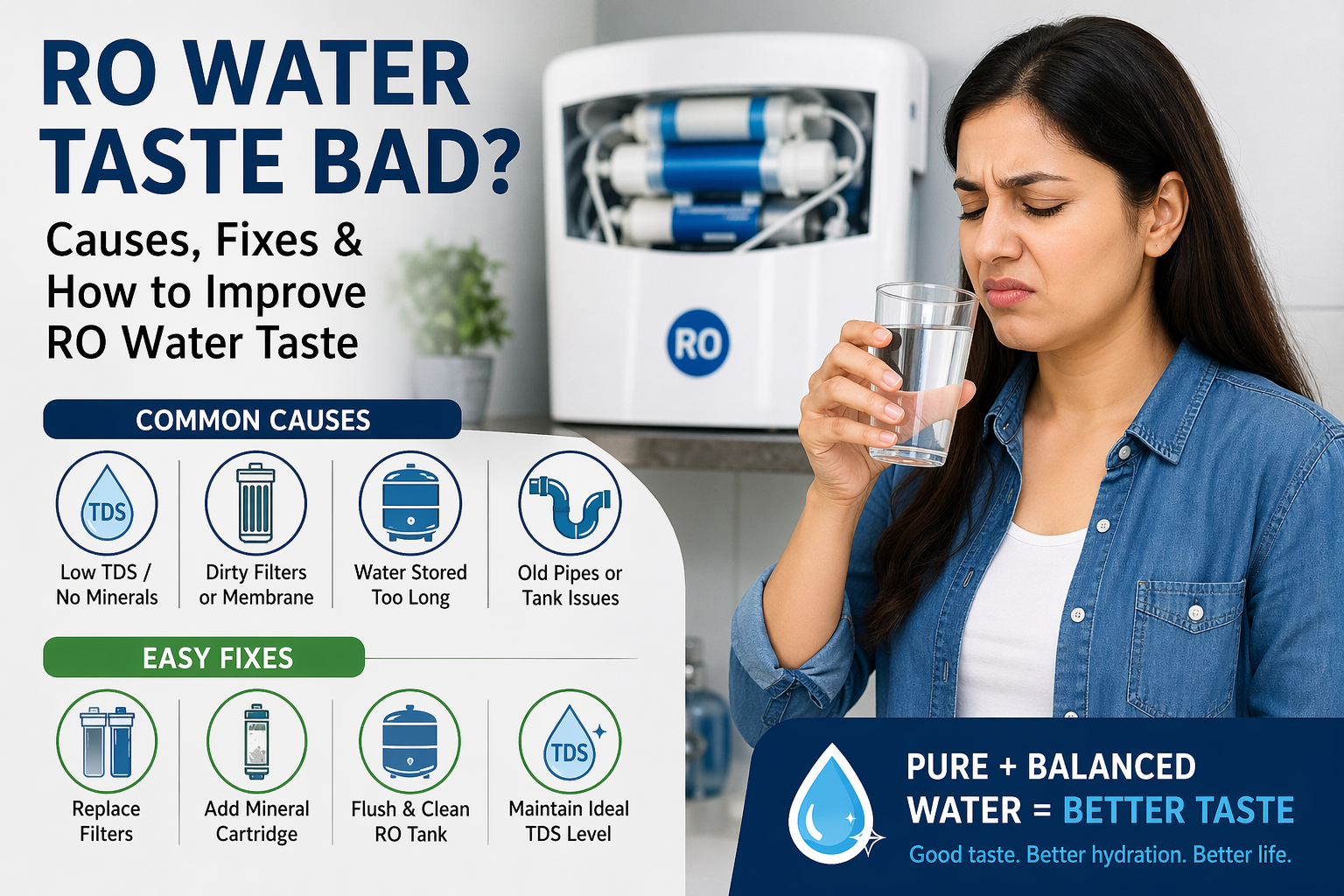
Have you ever taken a sip of RO water and thought… “Why does this taste so weird?” You’re not alone. Many people notice their RO water tastes flat, bitter, metallic, or even slightly plastic-like. It can be confusing because RO purifiers are supposed to give the purest drinking water, right?
Well, purity and taste don’t always go hand in hand.
In this complete guide, we’ll break down why RO water tastes bad, whether it’s safe, and most importantly — how to fix it quickly.
Why Does RO Water Taste Bad?
Quick Answer:
RO water tastes bad mainly because it lacks essential minerals like calcium and magnesium. Reverse osmosis removes up to 99% of dissolved solids, making water taste flat or bland. Other causes include old filters, stale tank water, or low TDS levels.
To fix it, replace filters, clean the tank, and use a mineral cartridge to improve taste.
RO Removes Essential Minerals
Natural water contains minerals like:
- Calcium
- Magnesium
- Potassium
- Sodium
These minerals give water a slightly sweet and refreshing taste.
But RO purification removes 90–99% of dissolved solids, including good minerals. What’s left? Very pure but flat-tasting water.
Think of it like eating food without salt. It’s clean — but bland.
Why Does My RO Water Taste Bitter or Metallic?
If your RO water tastes bitter or metallic, it usually indicates a problem with filters or internal components.
Common reasons include:
- Expired carbon filter
- Damaged RO membrane
- Rust inside storage tank
- Improper TDS level
This type of taste should not be ignored, as it may affect water quality. Immediate servicing is recommended.
Water Stored Too Long in Tank
RO purifiers store filtered water in a tank. If water sits there too long:
- It becomes stale
- Taste becomes flat
- Smell may develop
- Dissolved oxygen reduces
This makes RO water taste old and dull. In some cases, slow flow or storage issues can also affect taste. Check our guide on RO water purifier no water flow to identify related problems.
Dirty RO Filters or Membrane
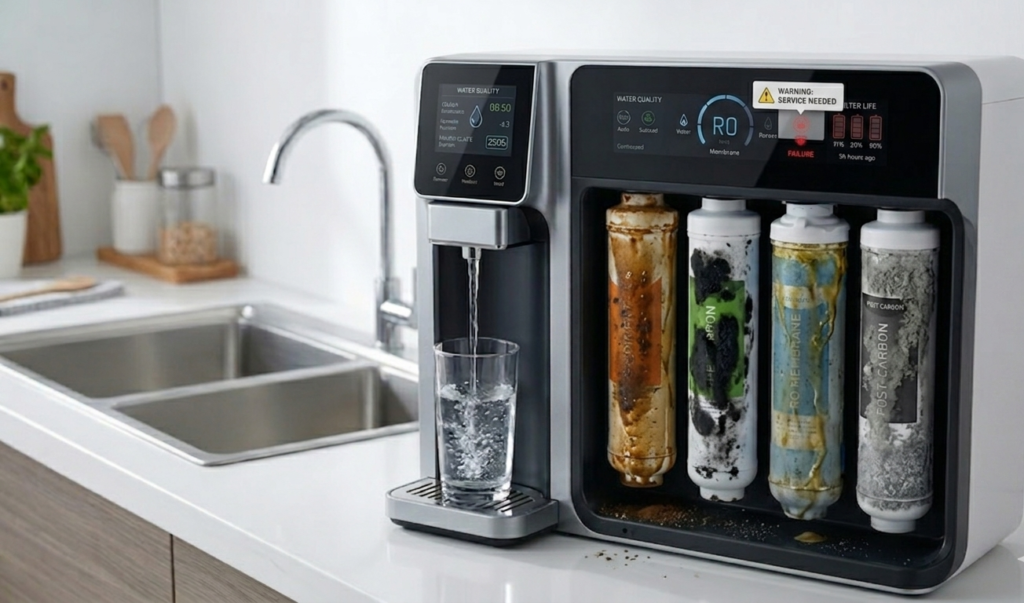
Old filters can cause:
- Bitter taste
- Muddy taste
- Chemical taste
- Metallic flavor
If your RO hasn’t been serviced in 6–12 months, this is likely the problem. If your purifier is also showing performance issues, read our detailed guide on water purifier not working to troubleshoot step-by-step.
Is Bad Tasting RO Water Safe to Drink?
Usually, yes — but not always.
Here’s a simple rule:
- Flat taste → Safe
- Bitter taste → Check filters
- Metallic taste → Replace cartridge
- Smelly water → Do not drink
If RO water smells or tastes very unusual, it’s better to stop drinking and service immediately.
Common Reasons Your RO Water Tastes Bad
Let’s identify the taste and the cause.
Flat or Bland Taste
This is the most common issue.
Cause:
- Very low TDS
- No minerals
- Fresh RO membrane
Fix:
- Add mineral cartridge
- Adjust TDS controller
Bitter Taste
Bitter RO water usually means:
- Old filters
- Membrane damage
- Excess carbon
- High rejection rate
Fix:
- Replace filters
- Flush system
Metallic Taste
If RO water tastes metallic:
- Storage tank rusting
- Old pipes
- Mineral imbalance
- Membrane failure
Fix:
- Clean tank
- Replace post filter
Plastic Taste
New RO purifiers sometimes produce plastic taste.
Why?
- New pipes
- New tank
- Plastic smell inside system
This usually disappears after 2–3 tank flushes.
How RO System Affects Water Taste
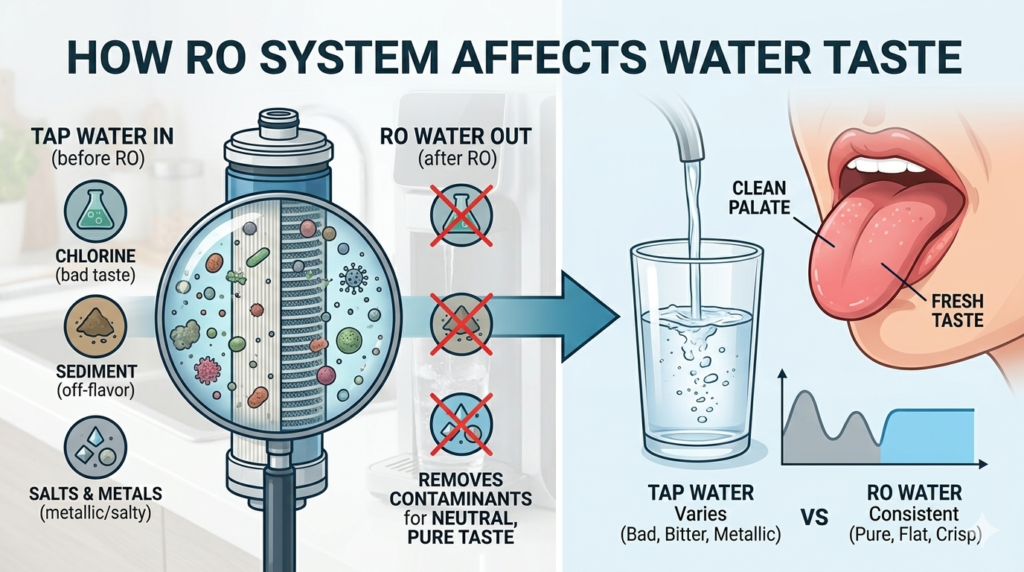
RO purification dramatically changes water chemistry.
TDS Reduction Impact
RO reduces TDS from:
- 500 ppm → 30 ppm
- 800 ppm → 50 ppm
- 1000 ppm → 80 ppm
Low TDS = low taste.
Water tastes best between 50–150 ppm.
Mineral Removal Effect
Minerals add:
- Sweetness
- Smoothness
- Mouthfeel
Without minerals, water feels:
- Thin
- Flat
- Empty
How to Fix Bad Tasting RO Water
Here are the best solutions.
Replace Filters
Replace:
- Sediment filter – every 6 months
- Carbon filter – every 6 months
- RO membrane – every 12 months
- Post carbon filter – every 12 months
This alone fixes 80% of taste problems.
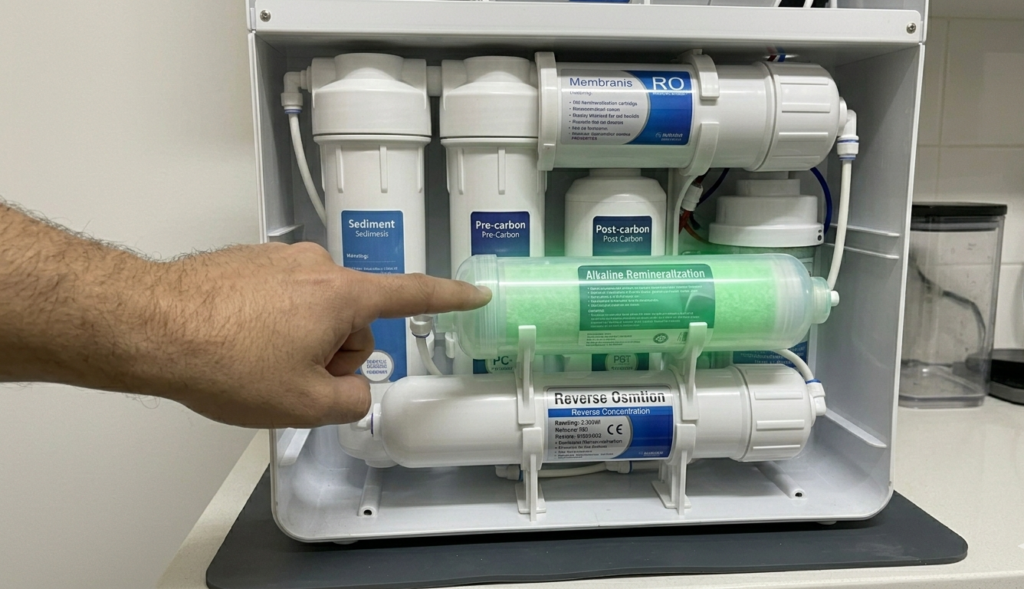
Add Mineral Cartridge
A TDS controller / mineral cartridge:
- Adds calcium & magnesium
- Improves taste
- Balances pH
- Makes water sweet
This is the best solution.
Flush RO Tank
Steps:
- Empty tank completely
- Fill again
- Drain again
- Repeat 2 times
This removes stale water taste.
Clean Storage Tank
Tank cleaning removes:
- Bacteria
- Smell
- Bad taste
- Slime buildup
Recommended every 6 months.
Best TDS Level for Good Taste
Here’s a quick guide:
| TDS Level | Taste |
|---|---|
| 0–30 | Very flat |
| 30–50 | Slightly bland |
| 50–100 | Good taste |
| 100–150 | Best taste |
| 150+ | Mineral taste |
Ideal RO TDS = 80–120 ppm
Should You Add Minerals to RO Water?
Yes — absolutely.
RO water without minerals:
- Tastes bad
- Feels flat
- Not refreshing
Adding minerals:
- Improves taste
- Improves hydration
- Balances pH
- Makes water natural
Benefits of Mineral Cartridge
- Sweet tasting water
- Balanced TDS
- Better health minerals
- No bitter taste
How Often Should You Service RO Purifier
Service schedule:
- Basic service – 6 months
- Filter change – 6 months
- Membrane change – 12 months
- Tank cleaning – 6 months
If not serviced, taste gradually gets worse.
Signs Your RO Water Taste Will Get Worse
Watch for:
- Water taste slowly changing
- Less refreshing
- Slight bitterness
- Tank smell
- Slow water flow
These are early warning signs.
DIY Tips to Improve RO Water Taste
Try these simple tricks.
Use Copper Vessel
Store RO water in copper vessel:
- Adds trace minerals
- Improves taste
- Natural alkalinity
Leave for 6–8 hours.
Use Remineralization Drops
You can add:
- Mineral drops
- Electrolyte drops
- Himalayan salt (tiny pinch)
Instant taste improvement.
Warning: When You Should NOT Drink RO Water
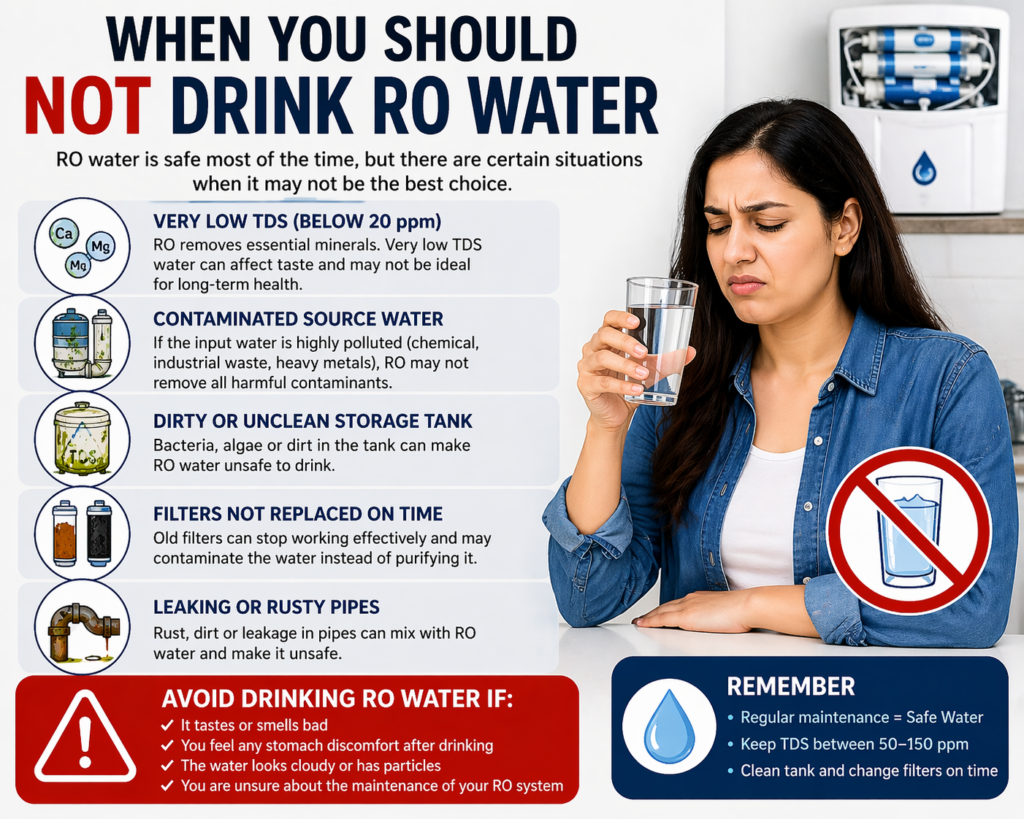
Avoid drinking RO water if:
- It smells bad
- It tastes extremely bitter or metallic
- Water appears cloudy
- Black particles are visible
These signs indicate contamination or system failure. Stop using the purifier and service it immediately.
When to Call Technician
Call service if:
- Water smells bad
- Bitter taste remains
- TDS below 20
- Black particles in water
- Water looks cloudy
These indicate system problem. If your purifier also has leakage along with bad taste, read our complete guide on water purifier leaking water for detailed fixes.
Conclusion
If your RO water tastes bad, don’t panic — it’s a very common issue. Most of the time, the problem is simply low minerals, old filters, or stale tank water. The good news? These problems are easy to fix.
Start with the basics: flush the tank, replace filters, and check TDS levels. If the taste is still not right, adding a mineral cartridge can completely transform your RO water from flat and boring to fresh and sweet.
Remember — pure water is good, but balanced mineral water tastes better and feels more refreshing.
FAQs
1. Why does RO water taste flat?
RO removes minerals like calcium and magnesium. Without minerals, water tastes bland and flat.
2. How can I make RO water taste better?
Add a mineral cartridge, adjust TDS, replace filters, and flush the storage tank.
3. Is bad tasting RO water harmful?
Not always. Flat taste is safe, but bitter or smelly water should not be consumed.
4. What is the best TDS for tasty RO water?
The ideal TDS level is between 80–120 ppm for best taste.
5. Do all RO purifiers make water taste bad?
No. RO purifiers with mineral cartridges produce sweet and natural tasting water.