Introduction
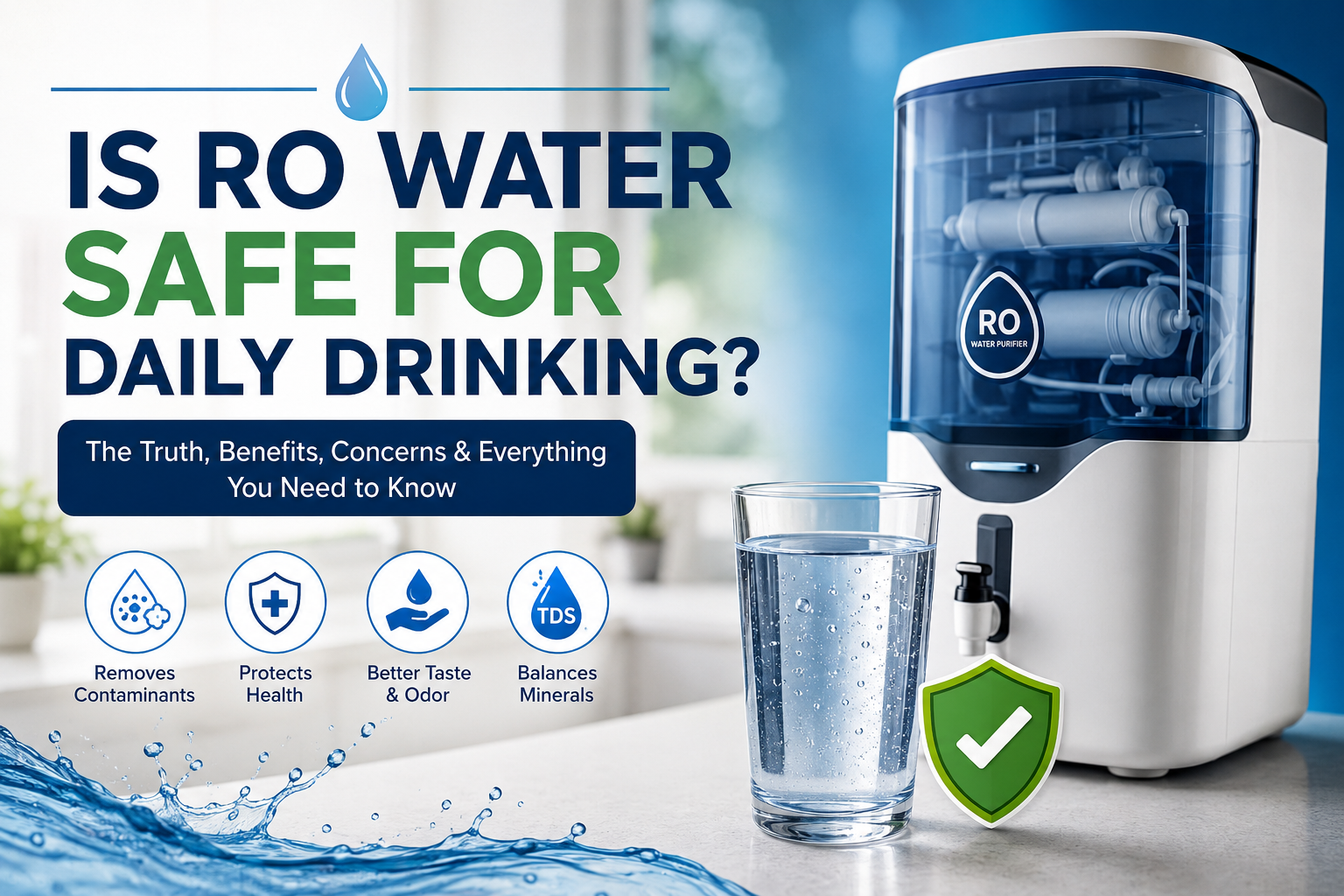
Water is life. But here’s the big question many people ask today: Is RO water safe for daily drinking?
With rising pollution, contaminated groundwater, and increasing concerns about waterborne diseases, millions of families now rely on RO water purifiers. Yet, confusion still exists. Some people say RO water is the healthiest option, while others claim it removes important minerals from water.
So, what’s the truth?
In this detailed guide, we’ll break everything down in simple language. By the end of this article, you’ll clearly understand whether RO water is safe for daily use, who actually needs it, and how to make sure your drinking water stays healthy.
Understanding RO Water
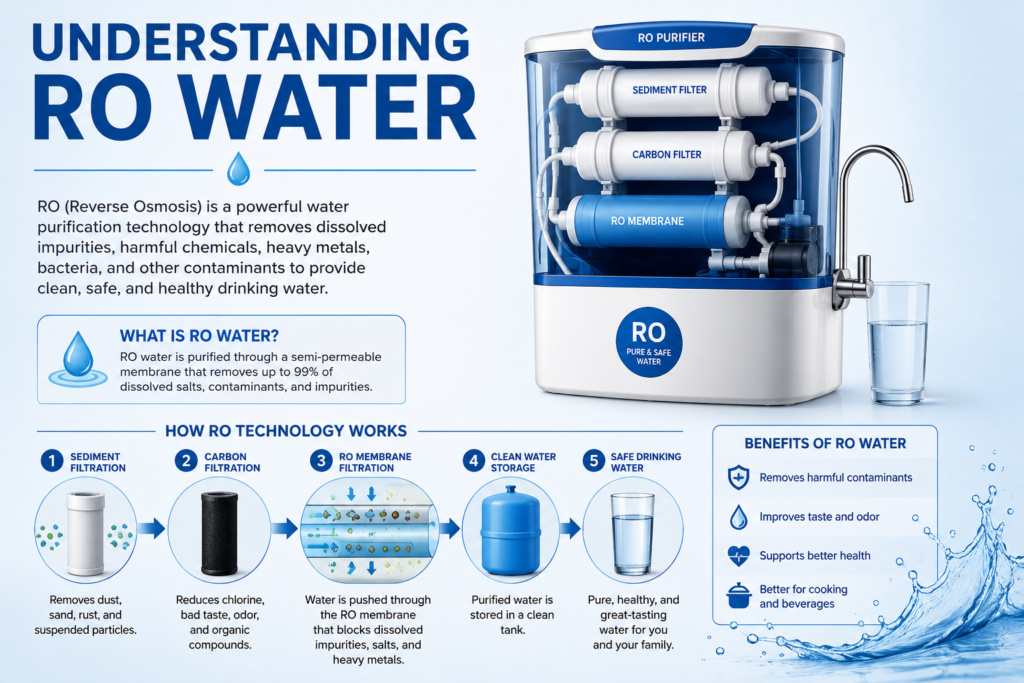
RO stands for Reverse Osmosis, a water purification technology designed to remove impurities from water.
Think of it like an ultra-fine security checkpoint. Water passes through a special membrane so tiny that harmful contaminants cannot cross it. Only purified water gets through.
Today, RO systems are commonly used in homes, offices, hospitals, and even industries because of their high purification capability.
How RO Technology Works
The process sounds technical, but it’s actually simple.
Here’s what happens inside an RO purifier:
- Water first passes through sediment filters.
- Carbon filters remove chlorine and odor.
- Water is forced through an RO membrane under pressure.
- The membrane blocks dissolved impurities.
- Purified water is stored for drinking.
The result? Cleaner and safer water.
It’s almost like squeezing dirty water through an invisible net that catches harmful particles while letting clean water flow through.
Why RO Purifiers Are Popular
RO purifiers became popular mainly because water quality has worsened in many areas.
Common reasons people choose RO systems include:
- High TDS levels in groundwater
- Bad taste or smell in water
- Fear of bacteria and viruses
- Heavy metal contamination
- Industrial pollution
In countries like India, where groundwater contamination is common in many regions, RO purifiers are often seen as essential household appliances.
What Does RO Water Remove?
One major reason RO water is considered safe is because of what the technology removes from water.
Harmful Chemicals Removed
RO purifiers can effectively reduce:
- Lead
- Arsenic
- Fluoride
- Pesticides
- Nitrates
- Chlorine
- Industrial chemicals
These contaminants can be harmful when consumed over long periods.
For example, excessive fluoride may cause dental or skeletal fluorosis, while lead exposure can affect brain development in children.
RO systems help reduce these risks significantly.
Microorganisms Eliminated
RO membranes can also block many harmful microorganisms such as:
- Bacteria
- Viruses
- Parasites
- Cysts
Modern purifiers often combine RO with UV and UF technologies for even better protection.
This is especially important in areas where waterborne diseases like typhoid, cholera, and diarrhea are common.
Is RO Water Safe for Everyday Use?
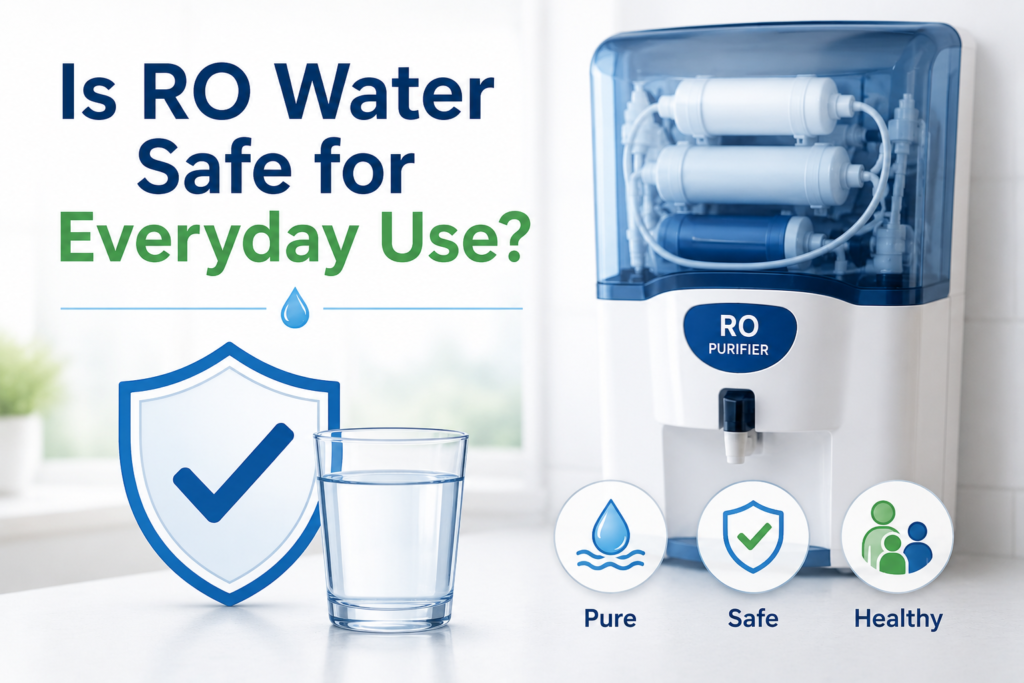
Yes, RO water is generally safe for daily drinking, especially when the source water has high TDS or contamination.
But here’s the catch.
Safety depends on:
- Water source quality
- Proper purifier maintenance
- Correct TDS levels
- Mineral balance
A properly maintained RO purifier with balanced TDS output can provide clean and healthy water for everyday use.
The real problem usually isn’t RO technology itself — it’s poor maintenance or unnecessary over-purification.
Benefits of Drinking RO Water Daily
RO water offers several advantages for regular consumption.
Better Taste and Odor
Nobody enjoys water that smells strange or tastes salty.
RO purification removes unpleasant odors and dissolved impurities, improving the overall taste of water.
That’s why tea, coffee, and cooking often taste better with purified water. If your purified water tastes strange or metallic, there may be an issue with filters, membrane condition, or TDS balance. Here’s a helpful guide on why RO water tastes bad and how to fix it quickly.
Reduced Risk of Waterborne Diseases
Contaminated water is one of the leading causes of illness worldwide.
Drinking properly purified RO water can help lower the risk of:
- Stomach infections
- Diarrhea
- Cholera
- Dysentery
- Typhoid
For families with children or elderly members, this extra layer of safety can be extremely valuable.
Concerns About RO Water
Despite its advantages, RO water has faced criticism over the years.
Let’s examine the biggest concerns.
Does RO Water Remove Essential Minerals?
Yes, RO purification removes not only harmful contaminants but also some beneficial minerals like:
- Calcium
- Magnesium
- Potassium
This is the main reason some people worry about drinking RO water daily.
However, the truth is more balanced.
Most of our essential minerals actually come from food, not water. A healthy diet usually provides enough nutrients even if drinking water contains fewer minerals.
Additionally, many modern RO purifiers now include:
- Mineral cartridges
- Copper infusion
- Alkaline technology
- TDS controllers
These features help restore healthy minerals into the water.
Can RO Water Become Too Pure?
Sometimes, yes.
If water TDS becomes extremely low, the water may taste flat and lose some natural mineral content.
Very low TDS water isn’t ideal for long-term consumption.
Experts generally recommend drinking water with balanced TDS levels rather than ultra-pure distilled-like water.
That’s why choosing the right purifier settings matters.
WHO Guidelines on Drinking Water
The World Health Organization (WHO) has discussed mineral content in drinking water.
While there’s no strict universal rule, extremely low mineral water is generally not considered ideal for long-term consumption.
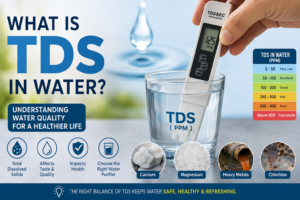
Many experts suggest maintaining drinking water TDS between 50–150 ppm for a good balance between purity and minerals.
Modern RO systems with TDS controllers can help achieve this balance effectively.
Who Should Drink RO Water?
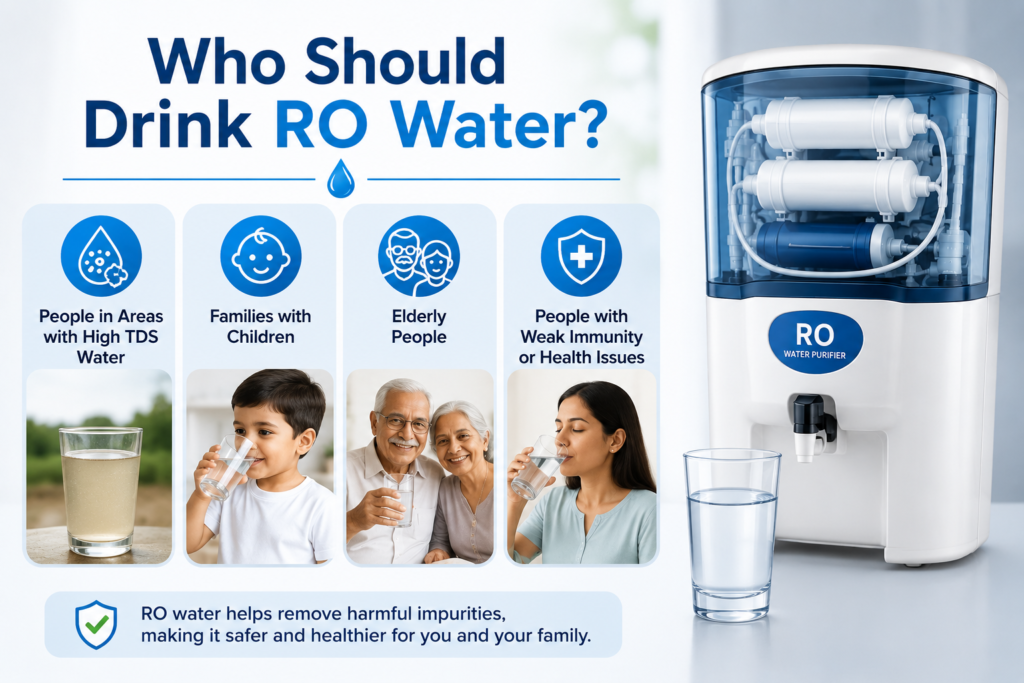
RO water is especially beneficial for certain groups of people.
Areas with High TDS Water
If your groundwater has:
- High salinity
- Hard water
- Heavy metals
- Industrial contamination
Then RO purification becomes highly useful.
In many Indian cities and rural regions, borewell water contains high levels of dissolved salts, hardness, and impurities. In such cases, choosing the best water purifier for borewell water with high TDS becomes extremely important for safe daily drinking.
Families with Children and Elderly
Young children and older adults usually have weaker immune systems.
Providing cleaner drinking water can reduce exposure to harmful contaminants and lower health risks.
That’s why many families prefer RO water for long-term household safety.
When RO Water May Not Be Necessary
Interestingly, not everyone needs an RO purifier.
If your municipal water supply already has:
- Low TDS
- Safe mineral balance
- Proper treatment
Then simpler purification systems like UV or UF may be enough.
Using RO unnecessarily may waste water and over-purify already safe drinking water.
Testing your water before buying a purifier is always a smart idea.
RO vs UV vs UF Purifiers
Many people get confused between RO, UV, and UF technologies.
Here’s a simple breakdown:
| Technology | Best For | Removes Dissolved Salts? | Removes Germs? |
|---|---|---|---|
| RO | High TDS water | Yes | Yes |
| UV | Municipal water | No | Yes |
| UF | Low TDS water | No | Somewhat |
RO is best when water contains dissolved impurities and high TDS.
UV and UF work better for relatively cleaner water sources.
Still confused about which purification technology is right for your home? Check out our complete comparison of RO vs UV vs UF water purifiers to understand which system works best for different water sources.
Tips to Make RO Water Healthier
You can improve RO water quality with a few smart steps.
Importance of TDS Controllers
A TDS controller helps maintain balanced mineral levels in purified water.
Instead of removing everything completely, it keeps essential minerals within a healthy range.
This improves:
- Taste
- Mineral balance
- Long-term drinking quality
Regular Maintenance of RO Systems
Even the best purifier becomes unsafe without maintenance.
Replace filters regularly and service the purifier on schedule.
Dirty filters can:
- Reduce purification efficiency
- Cause bacterial growth
- Affect water taste
Think of it like servicing a car. Regular care keeps the system running safely.
Signs Your RO Water Is Safe
Wondering if your RO water is safe?
Here are a few signs:
- Water tastes clean and fresh
- No unusual odor
- TDS levels are balanced
- Filters are regularly changed
- Purifier is professionally serviced
You can also use a TDS meter to monitor water quality at home.
Common Myths About RO Water
There’s a lot of misinformation online about RO water.
Let’s clear up some myths.
Myth 1: RO Water Has No Minerals at All
Not true. Many modern RO systems retain or add back essential minerals.
Myth 2: RO Water Is Dangerous
Incorrect. Properly maintained RO water is considered safe for daily drinking.
Myth 3: Everyone Needs RO Water
Nope. The need depends on your water quality.
Myth 4: Boiling Water Is the Same as RO Purification
Boiling kills germs but does not remove dissolved salts or heavy metals.
Environmental Impact of RO Purifiers
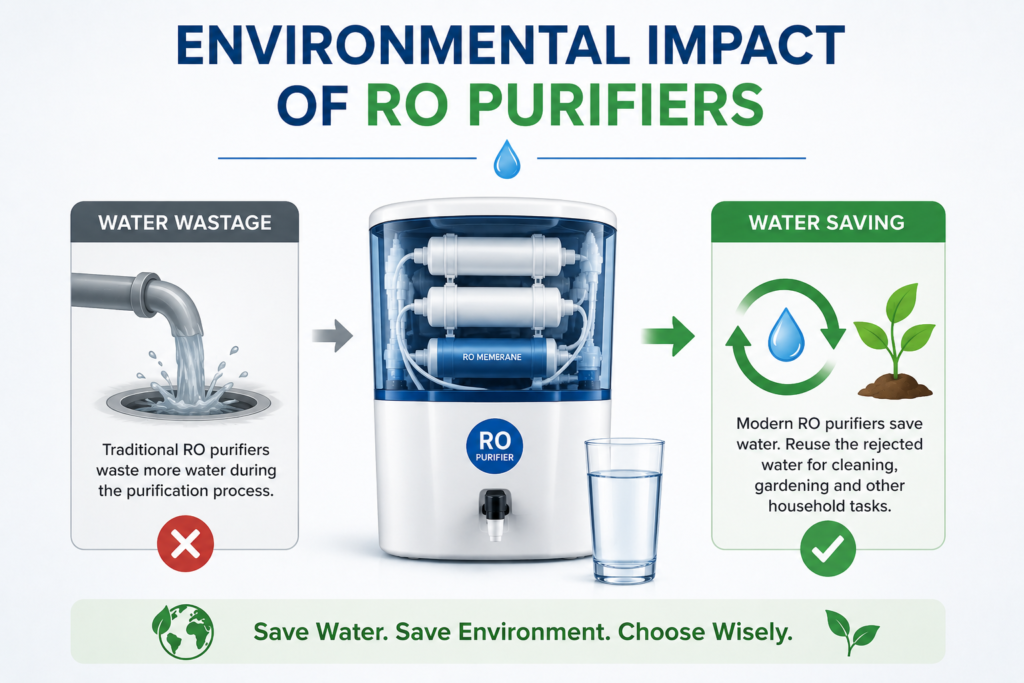
One valid criticism of RO systems is water wastage.
Traditional RO purifiers may waste several liters of water during purification.
However, newer models now offer:
- Water-saving technology
- Better recovery rates
- Low-waste purification
You can also reuse rejected water for:
- Cleaning floors
- Washing vehicles
- Gardening
This helps reduce water wastage significantly.
Choosing the Right RO Purifier
Buying the right purifier matters just as much as the technology itself.
Look for features like:
- TDS controller
- UV + UF combination
- Mineralizer
- Good storage capacity
- Reliable after-sales service
Most importantly, choose a purifier based on your actual water quality instead of blindly following trends.
Conclusion
So, is RO water safe for daily drinking?
The answer is yes — when used correctly.
RO water can effectively remove harmful contaminants, improve water safety, and reduce health risks, especially in areas with polluted or high-TDS water. However, balance is key. Over-purified water with extremely low minerals may not be ideal for long-term consumption.
The smartest approach is to:
- Test your water source
- Choose the right purification system
- Maintain balanced TDS levels
- Service your purifier regularly
At the end of the day, clean and safe water is one of the most important investments you can make for your family’s health.
FAQ
1.Can you drink RO water every day?
Yes, you can drink RO water every day if the purifier is properly maintained and the water has balanced TDS levels. RO water helps remove harmful contaminants like heavy metals, bacteria, and chemicals, making it safer for regular consumption. Modern RO purifiers with mineralizers or TDS controllers also help retain essential minerals for healthier drinking water.
2.Can drinking water reduce blood infections?
Drinking clean and safe water supports overall health and helps reduce the risk of infections caused by contaminated water. However, water alone does not directly “cure” blood infections. Proper hydration helps your body function efficiently, while purified water reduces exposure to harmful bacteria, viruses, and toxins that may contribute to illness.
3.Is RO water safe for kidneys?
Yes, RO water is generally safe for kidneys when consumed with a balanced diet. In fact, RO purification can help remove excess salts, heavy metals, and harmful impurities that may negatively affect kidney health. However, extremely low-mineral water over long periods may not be ideal, which is why balanced TDS levels are important.
4.What are the disadvantages of RO water?
RO water has a few disadvantages, including:
- Removes some beneficial minerals like calcium and magnesium
- Traditional RO systems may waste water during purification
- Requires regular maintenance and filter replacement
- Very low TDS water may taste flat
- Not always necessary for low-TDS municipal water
Despite these drawbacks, RO water remains one of the safest options for areas with contaminated or high-TDS water.
5.Is RO water 100% pure?
No, RO water is not usually 100% pure like distilled water. Reverse osmosis removes most dissolved impurities, chemicals, and contaminants, but some minerals and microscopic particles may still remain depending on the purifier and water source. Many modern RO systems intentionally retain essential minerals to improve water quality and taste.
6.Why should we not boil RO water?
Boiling RO water is usually unnecessary because the purification process already removes most bacteria, viruses, and contaminants. Additionally, boiling may slightly concentrate dissolved substances if water evaporates. While boiling RO water is generally not harmful, it does not provide significant extra benefits in most cases unless there is a specific contamination concern.