Borewell water is a lifeline for millions of households, especially in areas where municipal water supply is limited or unreliable. But here’s the catch — just because water looks clean doesn’t mean it’s safe to drink. Borewell water often contains high TDS levels, harmful metals, bacteria, and dissolved impurities that can silently affect your health over time.
That’s why choosing the best water purifier for borewell water is not just a luxury anymore — it’s a necessity. Think of a good water purifier as a security guard for your family’s health. It filters out harmful contaminants while ensuring every glass of water tastes fresh and safe.
In this detailed guide, we’ll explore everything you need to know before buying a borewell water purifier.
Understanding Borewell Water
Borewell water is groundwater extracted from deep beneath the earth’s surface using drilling systems. Since it travels through layers of soil and rocks, it naturally absorbs minerals and dissolved substances.
Sometimes that’s good. Sometimes it’s dangerous.
Why Borewell Water Needs Purification
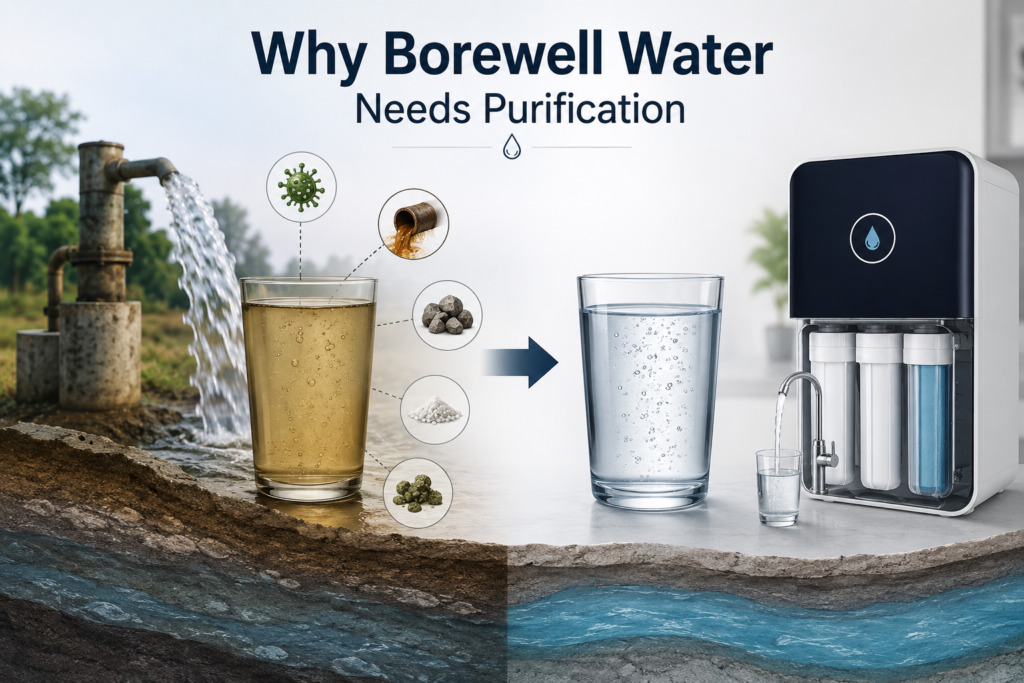
Unlike treated municipal water, borewell water is usually untreated. Depending on your location, it may contain:
- Excess salts
- Heavy metals
- Iron
- Fluoride
- Pesticides
- Bacteria and viruses
Drinking such water regularly can lead to health problems ranging from stomach infections to kidney issues.
Common Contaminants Found in Borewell Water
Here are some impurities commonly found in borewell water:
| Contaminant | Possible Effects |
|---|---|
| High TDS | Salty taste and scaling |
| Fluoride | Dental and bone issues |
| Iron | Metallic taste and staining |
| Arsenic | Serious long-term health risks |
| Bacteria | Waterborne diseases |
| Hardness | Damage to appliances |
This is why selecting the right purification technology matters so much.
How to Choose the Best Water Purifier for Borewell Water
Buying a purifier without understanding your water quality is like buying glasses without checking your eyesight. You need clarity first.
Check the TDS Level
TDS stands for Total Dissolved Solids. Borewell water usually has higher TDS compared to municipal water.
- Below 300 ppm → Generally acceptable
- 300–500 ppm → Moderate
- Above 500 ppm → Needs RO purification
An RO purifier is usually recommended for high TDS borewell water.
If you’re confused about TDS levels and why they matter, read our detailed guide on What Is TDS in Water? to understand how TDS affects drinking water quality and purifier selection.
Identify Water Contaminants
A water test helps identify contaminants like:
- Lead
- Arsenic
- Fluoride
- Nitrates
- Bacteria
Once you know what’s in your water, choosing the purifier becomes much easier.
Storage Capacity Matters
If your family consumes more water daily, choose a purifier with a larger storage tank.
General recommendation:
- 2–4 members → 6–8 liters
- 5+ members → 8–12 liters
Electricity Consumption and Maintenance
Some advanced purifiers consume more electricity and require regular filter replacement. Always check:
- Annual maintenance cost
- Filter replacement frequency
- Service availability in your area
Types of Water Purifiers for Borewell Water
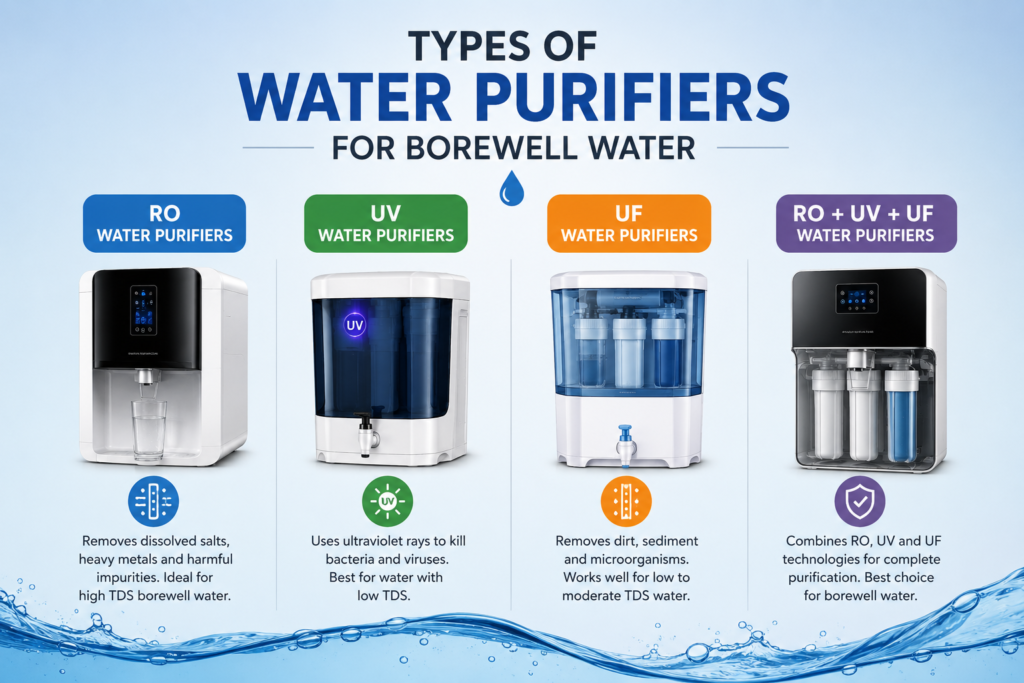
Not all water purifiers work the same way. Different technologies solve different problems.
RO Water Purifiers
RO (Reverse Osmosis) is the most effective option for borewell water with high TDS.
It removes:
- Dissolved salts
- Heavy metals
- Harmful chemicals
RO technology pushes water through a semi-permeable membrane that blocks impurities.
Best for:
- High TDS water
- Hard water
- Borewell water with dissolved contaminants
Britannica Reverse Osmosis Guide
UV Water Purifiers
UV purifiers use ultraviolet light to kill bacteria and viruses.
However, UV alone cannot reduce TDS.
Best for:
- Low TDS water
- Municipal supply water
UF Water Purifiers
UF (Ultrafiltration) removes suspended particles and microorganisms.
It works without electricity but isn’t ideal for high TDS borewell water.
RO + UV + UF Combination Purifiers
These multi-stage systems combine the strengths of all technologies.
Benefits include:
- TDS reduction
- Germ protection
- Better taste
- Improved filtration efficiency
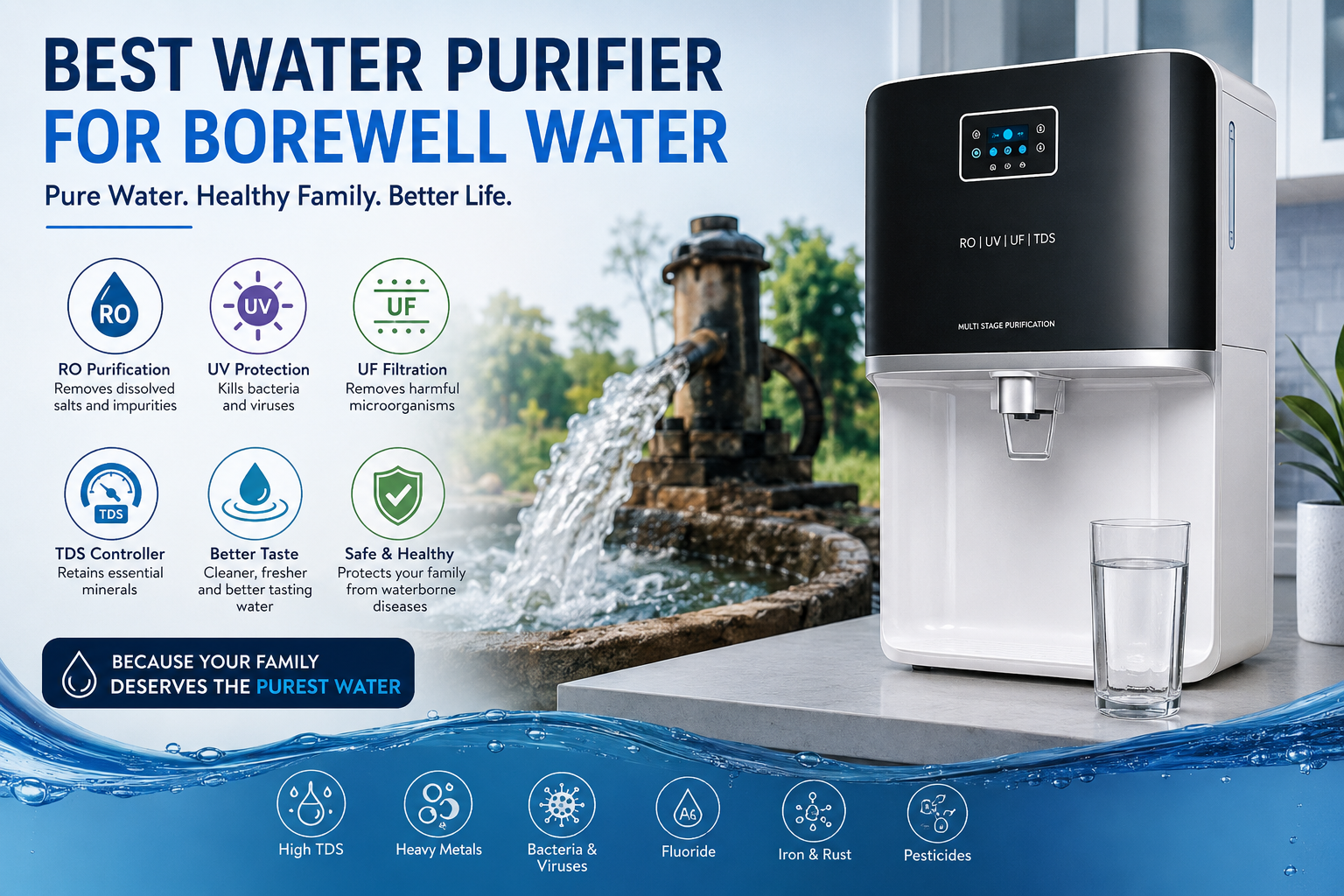
For most Indian households using borewell water, RO + UV + UF is often the ideal choice.
Still confused between purification technologies? Check our detailed comparison on RO vs UV vs UF Water Purifier to understand which system works best for borewell water.
Key Features to Look For in a Borewell Water Purifier
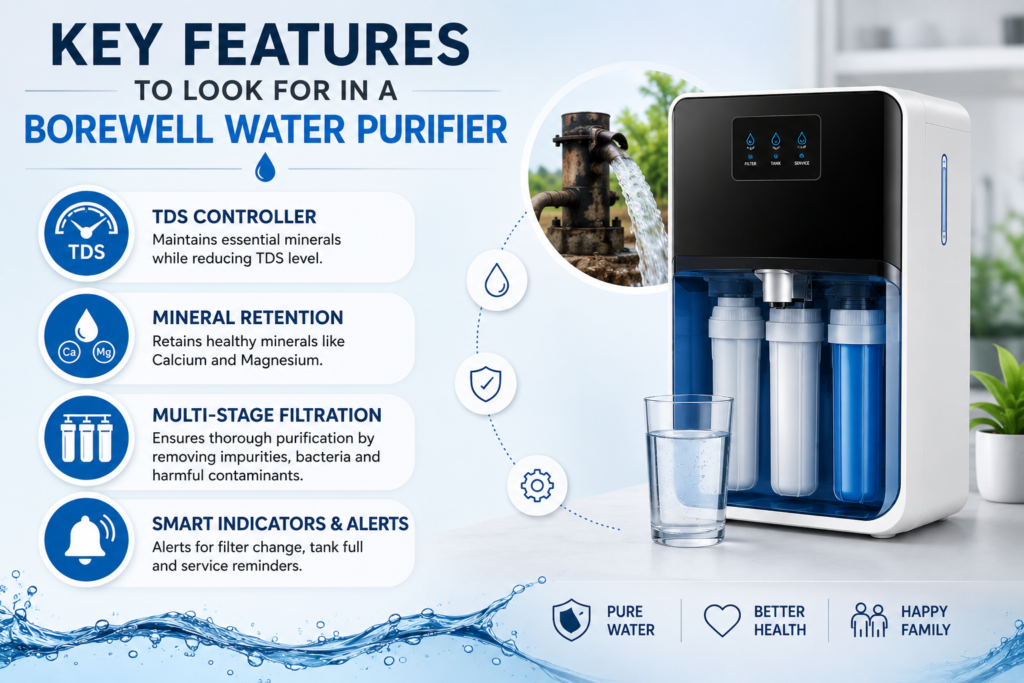
Modern purifiers come with several advanced features that improve performance and convenience.
TDS Controller
A TDS controller helps retain essential minerals after purification. Without it, water may taste too flat.
It balances:
- Purity
- Mineral retention
- Taste
Mineral Retention Technology
Some purifiers add healthy minerals like calcium and magnesium back into the water.
This improves:
- Taste
- Hydration quality
- Mineral balance
Multi-Stage Filtration
The more filtration stages, the better the purification process.
A typical premium purifier may include:
- Sediment filter
- Carbon filter
- RO membrane
- UV purification
- UF purification
- Mineral cartridge
Smart Indicators and Alerts
Smart indicators notify you about:
- Filter replacement
- Tank full status
- Service requirements
These features make maintenance easier.
Best Water Purifier Technologies Explained
Understanding purifier technologies helps you make a smarter buying decision.
Sediment Filtration
This is the first stage of purification.
It removes:
- Sand
- Dirt
- Dust
- Rust particles
Think of it as a gatekeeper stopping large particles from entering the system.
Activated Carbon Filter
Carbon filters improve:
- Taste
- Odor
- Chlorine removal
They also absorb certain harmful chemicals.
Reverse Osmosis Membrane
The RO membrane is the heart of the purifier.
It removes:
- Dissolved salts
- Heavy metals
- Fluoride
- Arsenic
This stage is especially important for borewell water.
UV Sterilization
UV light destroys:
- Bacteria
- Viruses
- Microorganisms
It acts like a microscopic shield protecting your drinking water.
Recommended Water Purifiers for Your Home
1. Kent Grand Plus RO+UV+UF Water Purifier
- Suitable for high TDS borewell water
- Mineral ROTM technology
- Trusted brand in India
- Good for families
2. Aquaguard Aura RO+UV+UF Water Purifier
- Active copper technology
- Multi-stage purification
- Smart LED indicators
- Ideal for borewell and tanker water
3. HUL Pureit Eco Water Saver RO+UV+MF
- Saves water during RO purification
- Handles high TDS levels
- Compact design
- Strong brand trust
4. AO Smith Z9 Green RO Water Purifier
- Hot and ambient water options
- Advanced RO filtration
- Good for modern kitchens
- Premium category product
5. Livpure GLO PRO++ RO+UV+UF Water Purifier
- Affordable option
- Good purification stages
- Suitable for medium to high TDS water
- Budget-friendly affiliate product
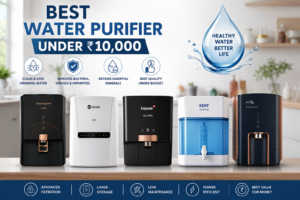
Looking for budget-friendly options? Explore our list of the Best Water Purifier Under 10000 for affordable and effective purification solutions.
Top Benefits of Using a Water Purifier for Borewell Water
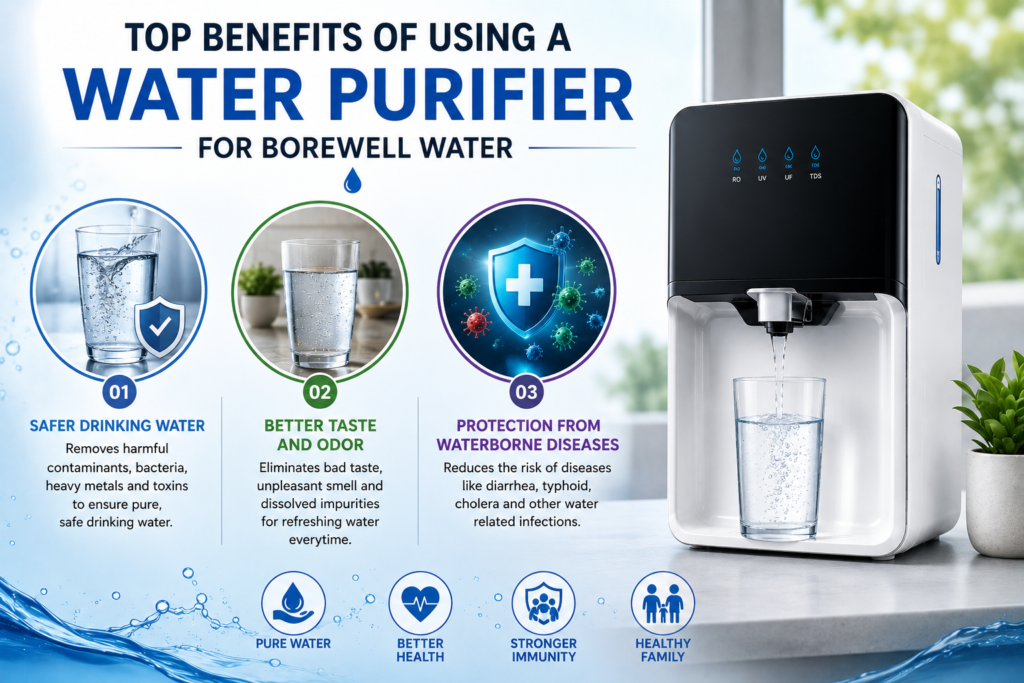
A good purifier offers much more than clean water.
Safer Drinking Water
The biggest advantage is protection from harmful contaminants.
Clean water supports:
- Better digestion
- Strong immunity
- Overall health
Better Taste and Odor
Have you ever noticed salty or metallic-tasting water?
A quality purifier significantly improves taste and smell.
Protection from Waterborne Diseases
Contaminated water can spread:
- Typhoid
- Cholera
- Diarrhea
- Stomach infections
Proper purification reduces these risks.
Common Mistakes People Make While Buying Water Purifiers
Many people rush into buying a purifier without proper research.
Ignoring Water Testing
This is the biggest mistake.
Without testing your water, you may:
- Overspend
- Buy the wrong technology
- Fail to remove harmful contaminants
Choosing Based Only on Price
Cheap purifiers may save money initially but can compromise water quality.
Instead, focus on:
- Filtration performance
- Service quality
- Long-term durability
Forgetting Maintenance Costs
Every purifier requires maintenance.
Common recurring costs include:
- Filter replacement
- RO membrane replacement
- Annual servicing
Always consider long-term expenses before purchasing.
Maintenance Tips for Borewell Water Purifiers
Regular maintenance keeps your purifier efficient and extends its lifespan.
Replace Filters on Time
Dirty filters reduce purification efficiency.
Most filters require replacement every:
- 6–12 months
RO membranes may last:
- 1–2 years depending on water quality
Clean the Storage Tank Regularly
Storage tanks can accumulate bacteria if ignored.
Clean the tank:
- Every 1–2 months
Schedule Annual Service
Professional servicing ensures:
- Proper functioning
- Leak detection
- Better filtration performance
Think of it like servicing a car — preventive care saves bigger problems later.
Experiencing reduced purifier performance? Read our guide on Water Purifier Slow Water Flow to troubleshoot common issues quickly.
Is RO Water Safe for Daily Drinking?
Yes, RO water is generally safe for daily drinking, especially when the TDS level is high.
However, extremely low TDS water may lack essential minerals. That’s why modern RO purifiers include:
- Mineral boosters
- TDS controllers
- Copper infusion technologies
The goal is balance — removing harmful impurities while preserving healthy minerals.
How Borewell Water Differs from Municipal Water
Understanding the difference helps you choose the right purifier.
| Feature | Borewell Water | Municipal Water |
|---|---|---|
| TDS Level | Usually high | Usually moderate |
| Treatment | Mostly untreated | Pre-treated |
| Hardness | Higher | Lower |
| Contaminants | Minerals and metals | Chlorine and microbes |
| Recommended Purifier | RO-based | UV/UF/RO depending on TDS |
Borewell water typically requires stronger filtration systems.
Why Water Testing Should Be Your First Step
Before investing in any purifier, test your water quality.
A water test reveals:
- TDS level
- Hardness
- Fluoride presence
- Heavy metal contamination
- Bacterial contamination
This information acts like a roadmap for selecting the right purifier.
Without testing, you’re simply guessing.
Signs Your Borewell Water Needs Immediate Purification
Sometimes your water itself gives warning signs.
Watch out for:
- Salty taste
- Yellow or brown color
- Bad smell
- White scaling on utensils
- Frequent stomach problems
These are strong indicators that your borewell water may contain excessive impurities.
Final Thoughts
Choosing the best water purifier for borewell water is one of the smartest investments you can make for your family’s health. Borewell water often carries hidden contaminants that cannot be seen with the naked eye. A reliable purifier acts like a protective barrier, ensuring every sip of water is clean, safe, and refreshing.
For most homes using borewell water, an RO + UV + UF water purifier with a TDS controller is usually the best option. But remember — the ideal purifier depends entirely on your water quality.
Start with a water test, understand your needs, compare features carefully, and prioritize quality over cheap pricing. Safe drinking water isn’t just about convenience; it’s about long-term health and peace of mind.
FAQs
1. Which type of water purifier is best for borewell water?
RO water purifiers are generally best for borewell water because they effectively remove high TDS, heavy metals, and dissolved impurities.
2. Which water purifier should I buy for borewell water?
You should choose a water purifier based on your borewell water’s TDS level and contamination type. If the TDS level is above 500 ppm, an RO purifier with a TDS controller and mineral retention technology is usually the best option. Families looking for complete protection often prefer multi-stage purifiers with RO, UV, and UF technologies.
3. What is the best filter system for borewell water?
The best filtration system for borewell water is a multi-stage purification system that includes:
- Sediment filter
- Activated carbon filter
- RO membrane
- UV sterilization
- UF filtration
4. Which is the No. 1 water purifier brand in India?
Several brands are popular in India for water purification,
including:
- Kent Aquaguard
- Pureit
- AO Smith
- Livpure
5. Can borewell water damage home appliances?
Yes, hard borewell water with high mineral content can cause scaling and reduce the lifespan of appliances like geysers and washing machines.